What Do Women Want
The definition of feminine fashion has never ceased to evolve. It lives on devoid of the need to conform to masculine appeal. Are you ready to help with a fashion revolution?
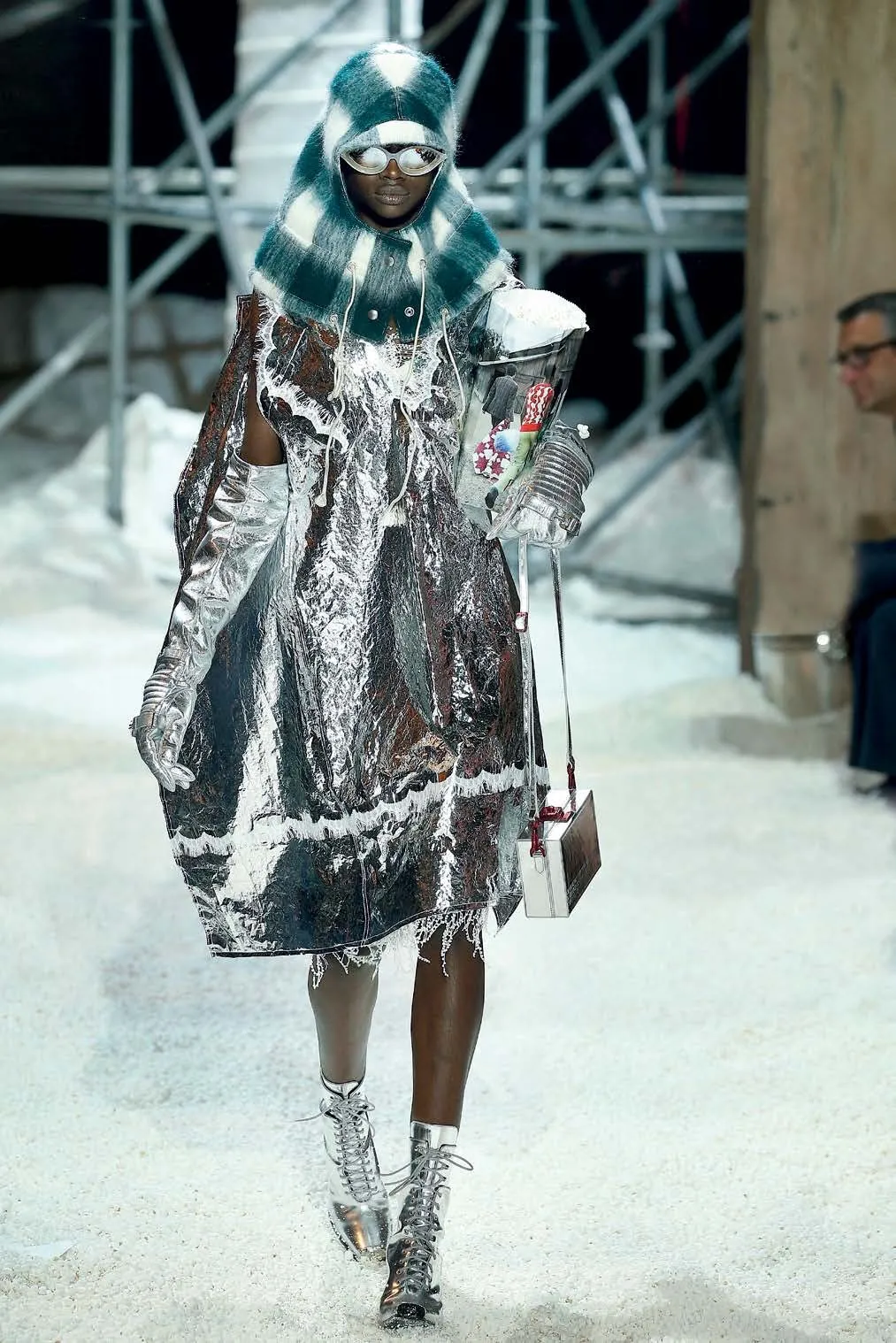




A pant or skirt suit accompanied by a pair of gumboots transformed into waders. A delicate slip under a secure parka with the hint of breast visible. An oversized leather trench coat matched with transparent dress. Knitted hats and astronaut gloves worn with reversed low-cut dress. We are talking about the show by Raf Simons for Calvin Klein, when a new tune was sung.
The Belgian designer put together workwear, cocoon clothing, a style with no gender and yet extremely feminine. The collection existed somewhere between modesty and provocation. It was a cocktail of contrasts and subtle avant-gardism. The traditional rules that dictated the terms of femininity were revisited and were made to co-exist with their opposites within the same silhouette.
 L’Officiel India DigitalRead L’Officiel India in the digital libraryEvery issue and every cover story, on TCG Media.Read now
A cerebral, sexy, abstract and transcending femininity has come together without a binary vision of genders and ideas. After the shock of the Weinstein affair was digested by the fashion world, the notion of femininity was questioned like never before. The new codes of femininity are non-codes, the freedom to show oneself as they wanted.
Femininity and its symbolic representations never stop changing. For centuries, the rules of beauty have never been consistent. The story of the low-cut dress has evolved from a place of severity to eroticism — from buxom to slim — the tightening of the waist with a corset now abandoned.
“Under the old regime, the rules of clothing were attributed to aristocracy. Masculine outfits of nobles opted for very rich ornamentation: short underpants with lace, velvet clothing adorned with embroidery, stockings and heeled shoes — synonymous with power and virility,” says Alice Litscher, professor at the French Institute of Fashion.
The change started to occur, noticeable, after the Revolution, “which historians of fashion, followed by psychoanalyst John Carl Flügel, called the Great Male Renunciation. Men, to establish their equality did, from then on, abandoned all refinement, which was to be reserved only for women. That was when the latter went headlong into an untethered acquiring of things for the ornamentation of the self, expressed through fabrics, corseted outfits and other decorative accessories, the height of which was undeniably the crinoline.”
A crinoline could be as wide as three metres in diameter and require 30 metres of fabric, resulting in an image of women, which was destined to please and seduce. “Frivolity was a pleasing quality for women while masculine allure was an air of seriousness,” writes Gilles Lipovetsky in his book De la légèreté (Grasset Publication, 2015).
With the onset of the 20th century, a tremendous rupture occurred in the way femininity was expressed when Paul Poiret got rid of the corset and launched his tubular dresses removing the accentuation of the hip entirely: the female form was now depicted as slender and fluid.
The 1920s brought the broadcasting of the garçonne model, then the development of sportswear and the masculinisation of female attire, the torch-bearer of which was Yves Saint Laurent in the 1960s.
Other visions of femininity manifested themselves in a concomitant fashion on the ramp: women’s armour by Thierry Mugler, the conical breasts by Jean Paul Gaultier, antiglamour models of the grunge movement: evolution is a constant.
“Now when we talk about this pivotal change in feminine expression the question of geography is an important one. If we are to compare the markets in the west with those in the east for example, it is fascinating to observe the different interactions that exist between femininity and seduction, eroticism and charm,” adds Nathalie Rozborski, director of the Nelly Rodi agency.
Taking control
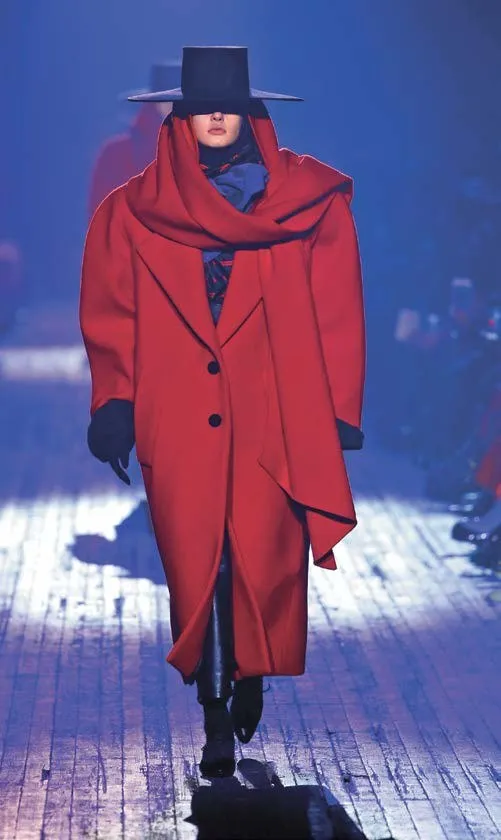
The notion of women empowerment was plastered on the ramps at the fashion weeks last March all over the world. With a multitude of propositions, all designers unveiled very different ideas and visions of what it meant to be feminine. During the Marc Jacobs show, we saw silhouettes that were very monastic, wrapped up in angular coats, scarves or hats on the heads, gloves hiding the hands.
A similar ambience existed during the Balenciaga show, layers upon layers of parkas and coats. With The Row, the Olsen sisters, true to the spirit of the House, stepped out in large, all enveloping overcoats, with a reserve. When it comes to the students of fashion school, the vision of what it is to be a woman and feminine is in the midst of an immense upheaval.
“The understanding of the sexualisation of a body and eroticism of the students at Parsons in Paris and New York – the makers of styles and images for tomorrow – is completely different from what we have been familiar with so far. The boundaries between masculine and feminine have become incredibly porous, and collections today a lot less about gender,” explains Leyla Neri, designer and head of the fashion department at the Parsons school in Paris.
Alongside this fashion which shows very little of the body and its form, there are also a host of different ultra-feminine propositions –from Saint Laurent to Balmain, Jacquemus with the mini dresses and cascading drapes. In his last show, a collection with very working girl accents, Alexander Wang designed a wardrobe entirely out of leather with spectacular detailing, like the belt with the acronym CEO on it, conveying that one can be sexy and a business woman.
“Over the years, the archetypes of femininity have been very limited: one would either be a princess, a childlike-woman, a diva or a harlot. The younger generations have brought to light the diversity and the uniqueness of personalities and identities. We have moved the cursor from the fantastical and unattainable to the real: it is the freedom to enjoy one’s femininity,” says Nathalie Rozborski, highlighting, therefore, the rise of activist beauty brands, such as Glossier by Emily Weiss and her movement for body positivity.
Molly Goddard, a 28-year old British designer is also of the same opinion. She has reinvented the girly trend with layered tulle dresses. “My dresses are created for every woman. Even though they are rather frilly but they are adjustable,” assures the designer, who insists on the importance of hiring models with different body types.
Points of reference
We are now observing a widening of the scope in which each designer and individual is not creating his or her own appearance: sensuality now co-exists with comfort –one can be feminine in streetwear. Who would be better than Rihanna to represent multidimensional femininity? She was seen wearing a classic and loose outfit at Élysée, a dress with a plunging neckline for the red carpet and a Gucci tracksuit with stilettos on her Instagram.
“All the prisms of femininity are usable today. They can be moulded to the situation and need, the time of day and how we want to be seen in the eyes of the other. It is now possible for women in the West to choose the degree of femininity they wish to be; in the image of French novelist George Sand, the pioneer of such thought,” says Alice Litscher. With the rise, on social media, of Kim Kardashian (who owns and plays with her body shape), the statement of “this is not acceptable” has reached a very different level. What about Brigitte Macron in a hoodie or in a Malabar pink dress above her knees? Silhouettes that are own.
And so, the possibilities have increased tenfold. But, as Nathalie Rozborski emphasises, “The quantitative analysis only demonstrates that the amount of time we need to accept these new archetypes of womanhood and femininity is very long. We are living a pivotal moment in the answeris to the question, filled with contemporary debates that reflect the real traumas and heritage of a thousandyear old civilisation.”
From the June–July 2018 issue of L’Officiel India.
Spotted a mistake, or your photo used without permission? Report a correction