Fabergé’s Aurélie Picaud: Keeper of Time
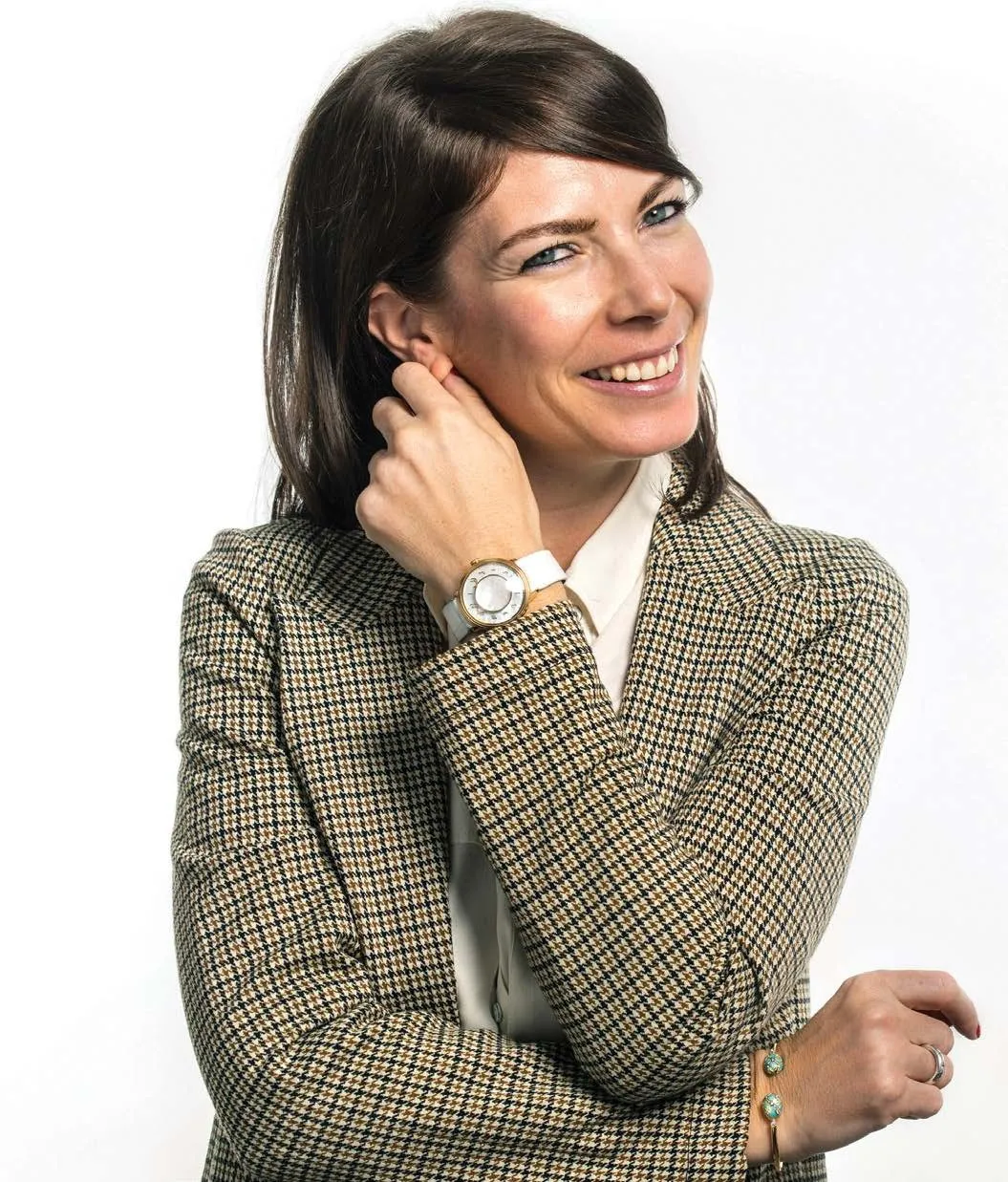

Aurélie Picaud, Timepieces Director at Fabergé does not like to rest on her past laurels. She moves from one project to another writing great stories for the history of timepieces.
Aurélie Picaud, Timepieces Director, Fabergé is one of the few women at the helm of the watchmaking company. There is not a ‘typical’ working day in her life and she feels lucky that her remit is so diverse. Juggling different tasks—strategy, product development, production, after-sales, client events, watch trainings—Aurélie has created a formidable line of watches under the Fabergé brand.
 L’Officiel India DigitalRead L’Officiel India in the digital libraryEvery issue and every cover story, on TCG Media.Read now
Talking to us exclusively from Geneva about exciting things in the pipeline, Aurélie shares her insight about the watch industry and where India stands in their priority list. Excerpts from the interview:
There has been a big development in the watch industry recently when Baselworld and SIHH decided to coordinate their dates. Do you think it’s good news and is a way forward?
The watch industry, like every other sector, needs to adapt to meet clients’ needs and remain relevant. So, coordinating dates to be more convenient is indeed a sensible approach.
Where does India figure on Fabergé timepiece priority list? Have you profiled Indian watch connoisseurs as your potential customers?
Fabergé is part of the Gemfields Group that has offices in Jaipur, Rajasthan and regularly attends the plethora of jewellery and gemstone fairs.
We are always fascinated by the creative use of colour in India, which is a real source of inspiration. In fact, Faberge’s love of colour seems a natural fit for the Indian market. I see India as a great opportunity and look forward to developing a presence in the future.
Where, according to you, does the watch industry stand today, given that the luxury market witnessed a slump earlier, but is in a better space now?
As mechanical watches are having to compete more and more with ‘smart’ watches, their sole function is not necessarily linked purely to telling the time nowadays, but rather to the relationship and journey the client will experience with the watch and the brand. Watches are increasingly being considered as unique and intricate pieces of art that connect with one’s identity in a personal way. At Fabergé, the movements and design of our watches are used to express our key values: surprise, wit, ingenuity, colour and history.
The House of Fabergé has a strong legacy. How much pressure did you feel when you joined?
I was very excited and honoured to take on the role. Being awarded a great deal of creative freedom is a fantastic challenge. It was a little daunting at first, as I needed to build a team and had only 18 months to develop and launch our new timepieces collections, which incorporated new exclusive mechanical movements, so I had to follow a strict plan.
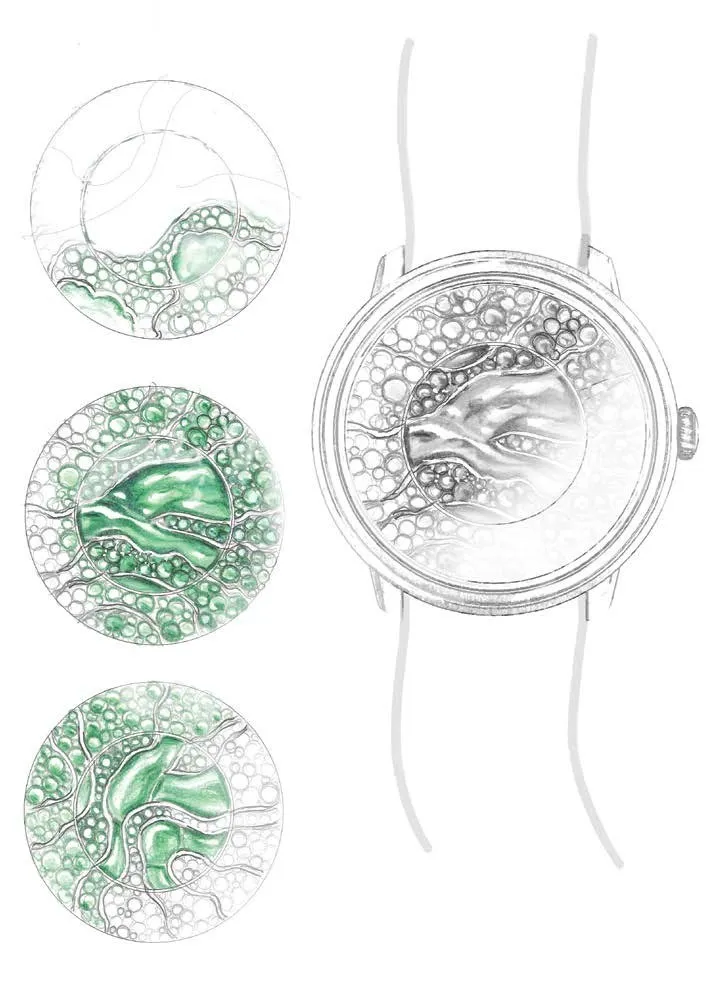
The biggest challenge was to identify a unique feature that resonated with Fabergé’s rich history and DNA. Innovation was also central to our design mandate.
How often do you find yourself in the archives? Does it inspire you?
Our archives provide a continuous source of inspiration to me as we always look to our heritage and reinterpret it in a way that is modern and surprising. For example, the Lady Compliquée Peacock watch is inspired by the peacock egg designed in 1908.
Sometimes the inspiration is less literal and rather reflects a nod to previous patterns. It is mixing and layering of unexpected materials together or designs of timepieces from the past.
Fabergé timepiece division has seen significant developments after you came onboard. What was your game-plan?
When I joined in November 2013, I was tasked to launch the new timepieces collections by March 2015 in Basel. Given the timeframe, I had to be very focused and decisive. My game plan then is not very different from today, working closely with exceptional workmasters to bring to the market something truly outstanding.
What were the challenges that you faced initially? How did you tackle them?
Having a short lead time was challenging, as we needed to build a team, design the collections, allow time for product development and address all technical issues.
We also needed to establish Fabergé as a watchmaker and remind people that Fabergé had designed clocks and watches in the past. Creating the right team, having a clear vision and acting decisively enabled us to tackle any challenges head on. We are so confident of the craftsmanship and quality we produce that we have established a 10-year warranty for all of our timepieces.
Tell us something about your designing and crafting teams?
Fabergé has historically always sought out the best designers and artisans in their field to create new pieces, be it jewellery, timepiece or objet d’art. We continue to honour the tradition of collaborating with workmasters.
Before 1917, Fabergé was already working with the best watchmakers of the time, Moser and Vacheron Constantin. We continue to select the best in class team, working with the likes of master watchmakers such as Jean-Marc Wiederrecht, Anita Porchet (master artist enameller) and master jeweller, Dick Steenman. We also have an in-house expert based in our Fabergé workshop in Geneva to oversee production, watch assembling, quality control, after-sales and shipping.
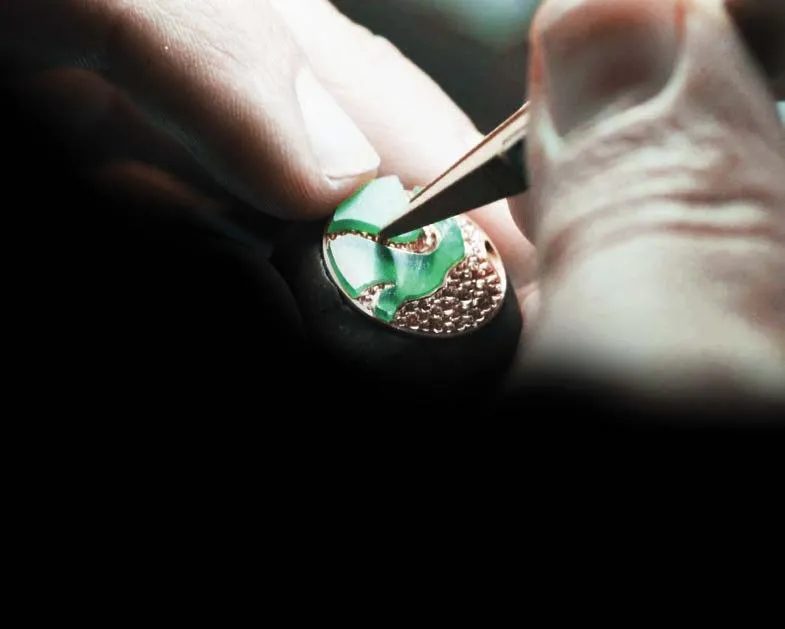
Take us through the design and crafting process for a timepiece?
Firstly, we outline our strategy and look to our heritage for inspiration. With regards to the design process, the main difference between timepieces and jewellery is that for watches we need to consider the technical aspects of the project from the very start of the process.
We cannot afford to spend weeks developing a design that ultimately is not feasible with the mechanisms of the watch movement. This also means that the team of suppliers (movement, case and dial) has to be selected at the start of the project, so that they’re involved throughout the design process.
The prototyping phase follows, which can take several weeks depending on how many iterations we need to come up with, before we are satisfied with the final result. As soon as all aesthetics and technical criteria and tests are established, the product can be produced.
We then work very closely with each component supplier (movement, hands, dial, case, strap, buckle) and once each component is quality-checked and accepted, the internal assembly of the watch starts in our workshop. A final quality control check is made before shipping.
Where are the ateliers and where does all the crafting happen?
Fabergé’s watch workshop is based in Meyrin, Geneva. Our workmasters are based in Switzerland, with the exception of our guilloché enamelling workmaster—who creates the enamel dials—who is located in Germany. So, our watches are almost entirely Swiss made.
What has been your most challenging project so far?
Challenges have arisen across various projects, stemming from a number of reasons, such as timing, technical challenges and development of new integrated movements. I think the most challenging project to date was the Visionnaire Chronograph as the movement is revolutionary.
What’s in the pipeline for 2019 for Fabergé timepieces?
Our focus remains on further developing both the watch department and new products. Now that we have established our main watch collections, we need to communicate this to both existing and new audiences, raising awareness of them and our unique approach to watchmaking.
We want to bring to life the storytelling behind our watches, deepening the understanding of Fabergé’s rich history of thoughtful gifting, craftsmanship and, of course, the famous Fabergé surprise. We hope to continue to surprise and delight through new innovations.
From the February 2019 issue of L’Officiel India.
Spotted a mistake, or your photo used without permission? Report a correction