Eye Of The Needle
Chikankari, zardosi and crushing have been the three bastions of Abu Jani and Sandeep Khosla, as they continue to showcase complex compositions. The duo reveal their style obsessions and why they are peeved by un-Indian, body-hugging gowns and the pugnacious need for fast-paced style.
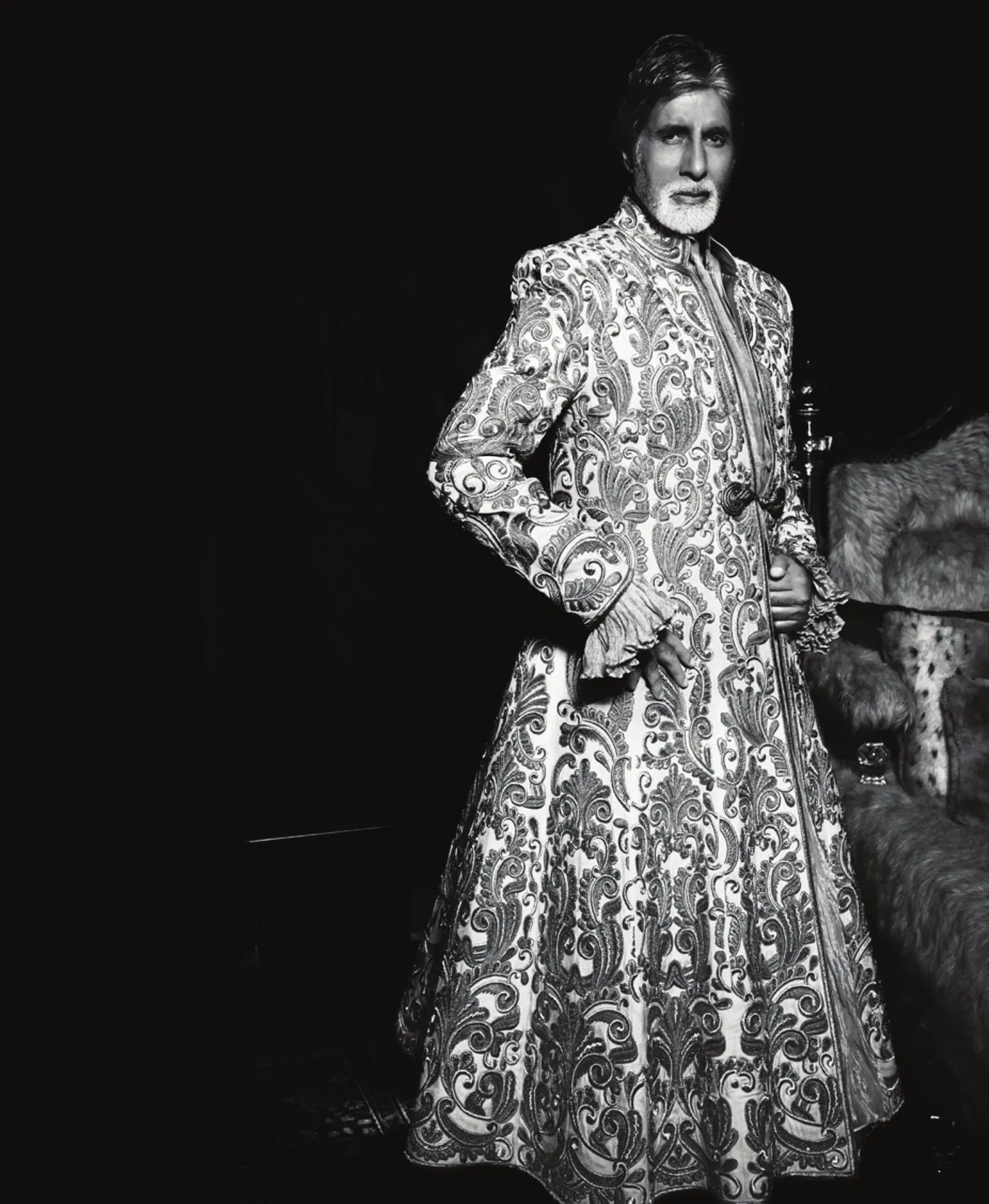


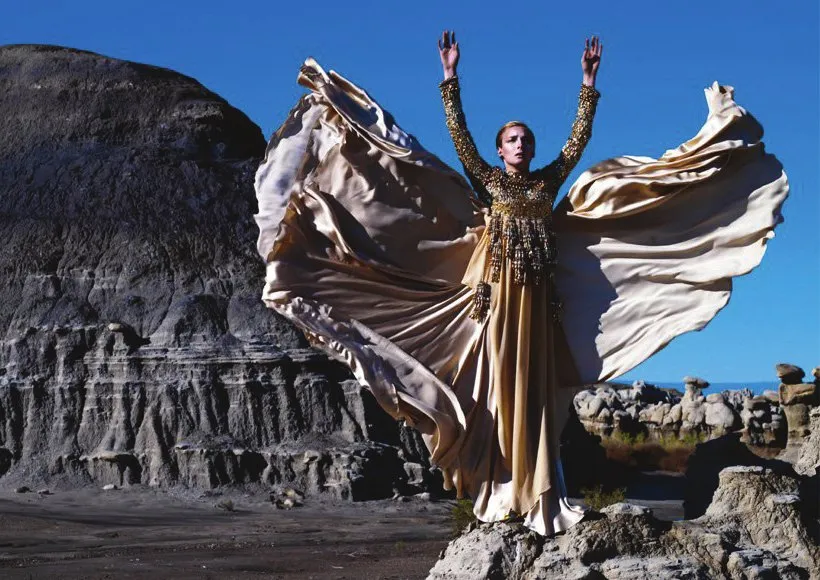
The celebrated Asian-British lensman Ram Shergill, also known for his avant-garde magazine Drama, with Fabrice Jacobs, has paid a wholesome tribute to the giants of couture—Abu Jani and Sandeep Khosla. Besides shooting their book India Fantastique to mark their 25th anniversary, Shergill has included some of his pioneering work from the book in his exhibition in Mumbai. Titled Kaleidoscope, it chronicles his journey as a fashion photographer, shooting the most famous faces from Naomi Campbell to Shweta Bachchan. These are many of the firsts for the duo, who have been in the business of dressing the most beautiful women from Dimple Kapadia and Aishwarya Rai Bachchan to Dame Judi Dench in their grandiose collections, for the last 28 years. Talking about Shergill, Sandeep Khosla says, “Ram understands the dynamics of photographs, and he has exhibited ten of the images he shot for us, in Kaleidoscope.”
When Abu Jani and Sandeep Khosla started showcasing their work at Bindiya Jain’s store Signature in Hauz Khas Village, almost two decades ago, there were only four other major players in a market that was hoping to convert the salwar-kameez and semi-circular-cut lehenga-loving women into something more striking. Sandeep says, “Now, there is the bastardisation of the word couture. Everyone uses it loosely—from a shop in Karol Bagh to a young designer who probably has nothing in that category to offer. Like the moniker ‘design’ or ‘artist’, this is a much abused term.”
 L’Officiel India DigitalRead L’Officiel India in the digital libraryEvery issue and every cover story, on TCG Media.Read now
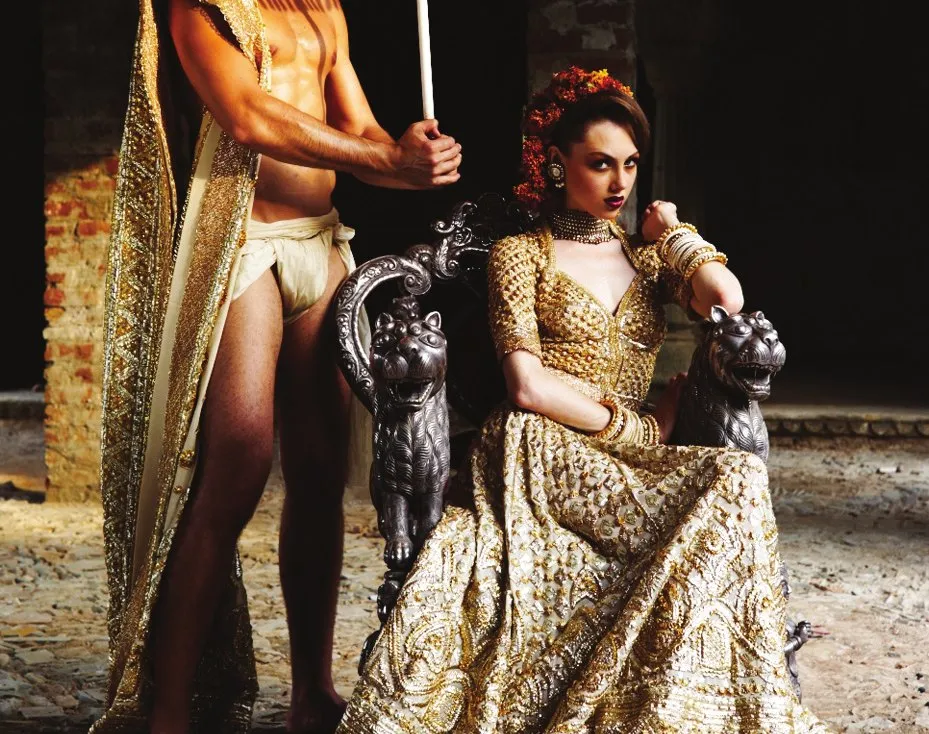
With an initial investment by both of ₹50,000 each into an infant business, the two struggled to find an audience that would respect the craft element in their offerings. “A discerning few admired our colour block saris. When we started doing gota, it was considered cheap and unusable, mostly to be restricted to just the borders or hemlines, never to find a place of pride on the bodice. Now everyone wants more of it,” smiles Sandeep. The pure soul of India Sandeep wanted to showcase the best that India had to offer. That was his label’s mission statement. So when he took up chikankari, which was being done on sub-standard cotton without the intricacy it was famed for, it was a challenge to revive and restore its lost glory. “We had two aunts in Lucknow and we gave them chiffon, organza and silk to work with, and they refused point-blank,’’ he says. ‘‘It took a lot of cajoling to make them agree and when they did, it changed the way the embroidery was perceived.” They had their first exhibition at The Oberoi Hotel, years ago, and it was a huge success, prompting them to adopt this craft into their repertoire.
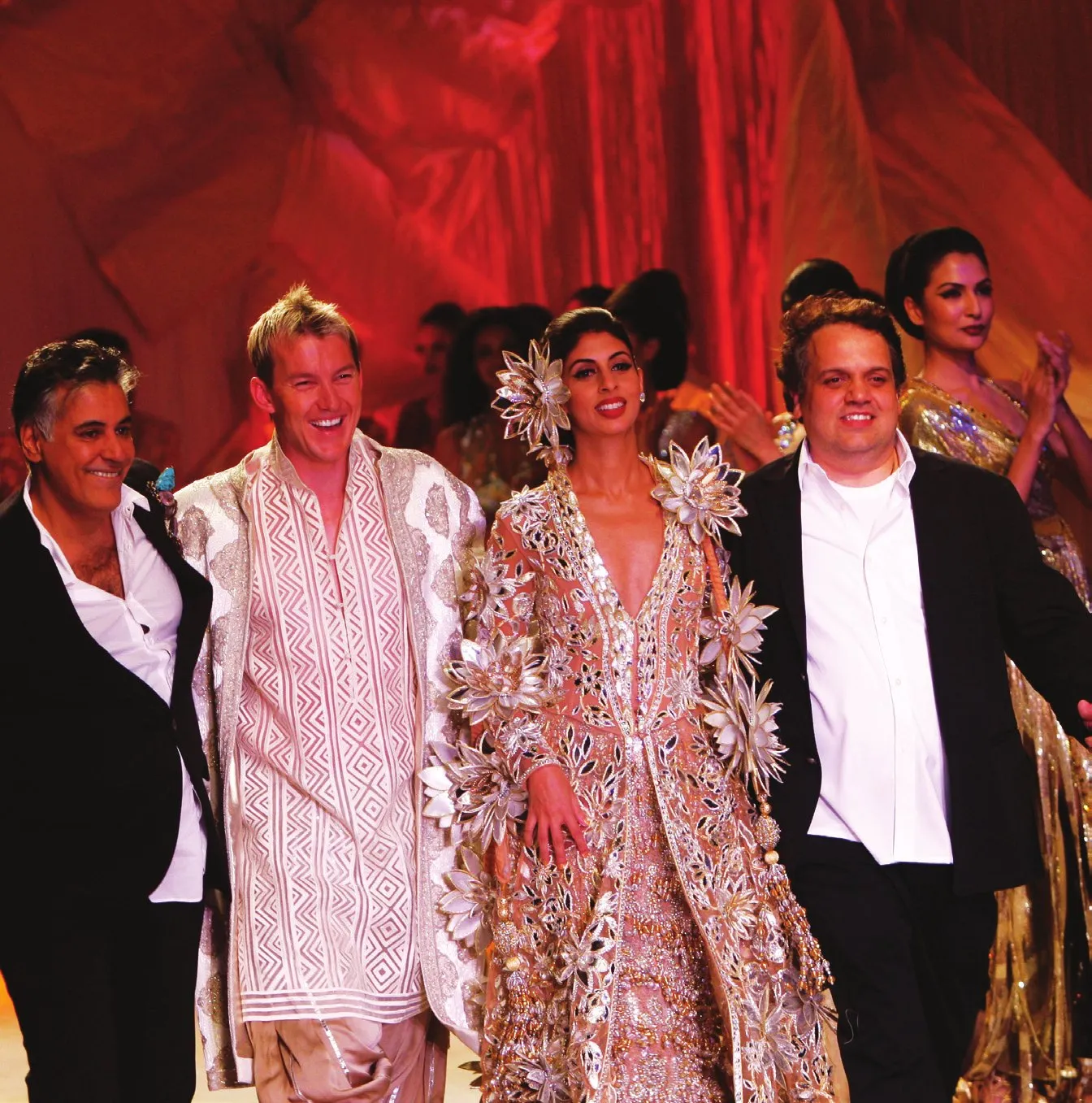
Khosla with Shweta Nanda and Brett Lee Even though it is tough to survive in a market which is bursting at its seams with a new designer popping up every nanosecond, Sandeep confesses that the game is to remain relevant in today’s times, where, like everything, fashion is breathlessly fast-paced. “So we try and concentrate on what we are good at— embroideries, surface ornamentation and detailing, and of course, our mainstay—the use of the finest fabrics,” he adds. The two things that they can be credited with are the resurrection of chikankari and zardosi resurrection, with the latter mostly done in Bareilly with nakshi ka challa incorporated. They moved away from traditional means to a finer work with more depth and intense stitches. “Abu has a magical hand and is a master at drawing motifs, so everything that we give our craftsmen is personally hand-sketched by him,” he explains. Ironically, as trend pundits have heralded white as the new bridal colour, Abu and Sandeep feel vindicated. They were the first to intrepidly introduce ivory and beiges in the bridal trousseau, when it was considered a widow’s colour way back in the early 90s. Sandeep confides, “I remember one day in 1989 a garment got stained and we twisted it to hang it out to dry after scrubbing off the stain, and we observed how beautiful the kalidar kurta looked crushed. That was the beginning of our romance with crushing, which we have been loyal to all these years.”
With app-friendly brides subscribing to the Western psyche and abandoning the sari for an off shoulder gown, Sandeep has stayed away from it despite the messianic temptations. “It has never been our brand’s DNA to do something un-Indian,’’ he declares. ‘‘We have stood by our principles and have neither done dresses nor minis. Indian women have so much to choose from, then why should I force them to wear a totally alien concept?”
This philosophy extends to even his bridal wear, which is never gimmicky, rather classic, with no extra can-cans or crazy fishtails. An Abu-Sandeep would have an 8-12 kalidar kurta, with labyrinthine zardosi motifs inspired by Mughal architecture and if you turn their kurtas over, you can’t tell the front from the back, so sinuously is it executed.
With most designers increasingly looking for financial backing, Abu and Sandeep are hoping to do a prêt line that will reach out to a wider audience. “That’s the only way to grow and build a large global brand, which is our dream,” he concludes.
Spotted a mistake, or your photo used without permission? Report a correction