

NATHANAËLLE HOTTOIS GALETLOLE,
FOUNDER & CEO, FASHION WEEK STUDIO
Fashion Week Studio, founded by Nathanaëlle Hottois, reimagines the runway as a space of access, artistry, and elevation. Since 2017, it has shaped over 300 shows across global fashion capitals, bridging independent creativity with world-class production. Rooted in vision and precision, it transforms barriers into platforms where emerging designers stand confidently alongside global fashion houses.
Nearly a decade ago, a designer who had grown weary of an industry that kept so much talent outside its most powerful rooms built a door where there had only been a wall. Today, Fashion Week Studio operates across Paris, Milan, Lake Como, and London, producing luxury-level runway experiences for independent designers who, not long ago, may never have imagined themselves within the fashion week circuit. Its founder, Nathanaëlle Hottois Galetlole, is not interested in simply filling calendars. She is building an ecosystem: one where emerging and independent designers are not only seen but represented, supported, and positioned to grow. In this conversation, she speaks about access, artistry, cultural identity, and what she believes the next era of fashion must become.
FOURSIS & CO
“Artists are the architects of culture. Our purpose is to protect that creative universe, allowing designers to remain fully in their element while we take care of everything around them.”

FOURSIS & CO, the Japanese bridal house founded in 1995, unveiled its latest collections at an exclusive private showcase in Paris. Featuring FOURSIS BRIDE, Ameris, and Ashupine, the presentation highlighted refined craftsmanship, modern silhouettes, and inclusive design. The showcase reflected a progressive vision of bridal couture blending tradition, emotion, and innovation.
To begin, how would you introduce yourself and the vision behind Fashion Week Studio to our readers?
My name is Nathanaëlle Hottois Galetlole. I am half Italian, half Belgian, born in Denmark, and I spent a significant chapter of my life in the United States before settling in South Africa, where I have lived for the past four years with my husband and our four children. I came to fashion as a designer, not as a business person, and that distinction matters enormously in how Fashion Week Studio came to exist. The company was founded in 2017, and as we approach our tenth year in business, we have produced more than 400 runway presentations across Paris, Milan, Lake Como, and London. What began as a response to a very real problem, the inaccessibility of fashion week for independent designers, has grown into something much larger. Fashion Week Studio is now a complete platform. We produce shows, but we also represent brands, connect designers with buyers, facilitate press and marketing, and support long-term brand positioning. We are infrastructure, not just spectacle. The vision that drives everything we do is the belief that artists are the architects of culture. Designers shape the way we see ourselves, one another, and the world around us. When those artists are given the right space, support, and audience, the results can be extraordinary. Our purpose is to protect the creative universe, allowing designers to remain fully in their element while we take care of the structure around them: business, visibility, strategy, and storytelling.
Frida Xhoi & Xhei
 Frida Xhoi & Xhei presented a powerful couture statement at Shangri-La Paris, redefining modern femininity through precision and restraint. The collection featured architectural corsetry, fluid yet structured silhouettes, and refined craftsmanship with lace and embroidery. Emphasizing quiet strength over spectacle, it showcased a commanding vision of heritage couture shaped for the present and future.
WHAT INSPIRED YOU TO TRANSFORM YOUR PERSONAL JOURNEY AS A DESIGNER INTO A PLATFORM SUPPORTING INDEPENDENT TALENT WORLDWIDE?
The answer is simple and comes from lived experience. I saw a gap, and I could not look away from it. When I was working as a designer, I experienced first-hand how closed fashion week could feel. The runway, particularly during Paris Fashion Week, had been built over generations for a very small number of houses. Everyone else was left to find their own way in, often at a cost that made it impossible. To produce a show of genuine luxury quality independently, a designer could easily need to spend 150,000 euros or more. That kind of investment is prohibitive not only for emerging talent but also for many established independent brands. Beyond the financial barrier, there was another question that mattered just as much: was the designer actually reaching the buyers, editors, stylists, and industry figures who could make a meaningful difference to their business? The model I developed was rooted in collective strength. By bringing designers together and sharing the cost of exceptional venues, world class production, models, press, marketing, and guest curation, we could offer each designer an experience that would have been out of reach individually, and do so at a fraction of the cost. When we presented our first season, we showcased four collections. Six months later, that number had grown to twenty. The demand told us everything we needed to know. I still remember that first season very clearly. We had worked so hard to bring everything together: the designers, the models, the hair and makeup, the venue, the atmosphere. It looked exactly like the dream I had carried in my mind. But just before the doors opened, my greatest fear was that nobody would come. I remember thinking that if the room was empty, it could be the end of what I had just begun. Then I looked outside and saw people lining up in the hallway, waiting to enter. The room became so full that people were standing. That moment never left me, because it confirmed that there was a real need for what we were building. What we created was not just a more accessible runway. It was a new model for how independent designers could enter fashion week with dignity, quality, and industry relevance. We are proud to have helped pioneer that shift. Today, we are moving into the next phase: not only showing collections, but actively representing brands, placing them with buyers, and building commercial infrastructure around their creative work. The runway is the beginning of the conversation, not the end of it.
IORIYA
“The venues we work with carry context. They carry associations with the great houses of fashion. When a designer shows within those walls, they inherit a narrative.”

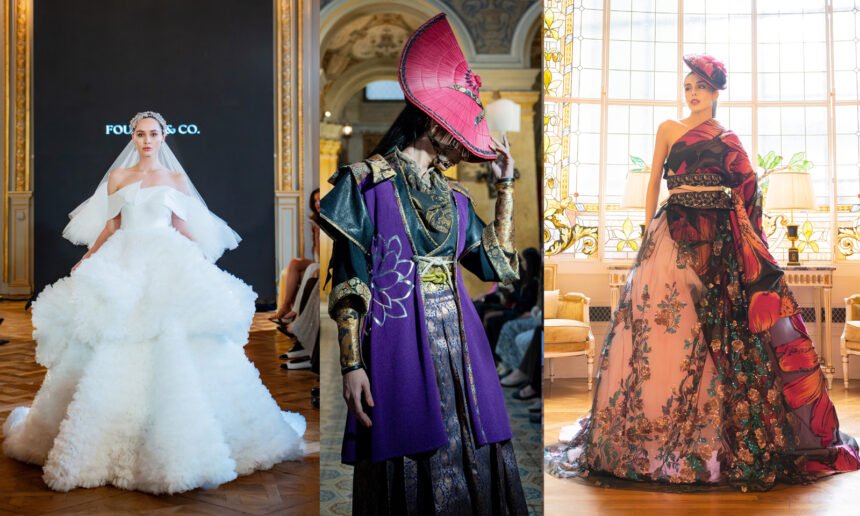
IORIYA elevates Japanese traditional stage aesthetics into high couture. Celebrated in Paris and Milan, our “Wearable Expression” connects global cultures through exquisite, modern elegance.
BEFORE FOUNDING FASHION WEEK STUDIO, WHAT CHALLENGES DID YOU PERSONALLY FACE WHILE TRYING TO ENTER THE INTERNATIONAL FASHION WEEK CIRCUIT?
The first challenge was financial, and it was formidable. The cost of producing a high quality show independently is extraordinary. It becomes a filter, allowing only those with significant backing to participate. But the financial challenge was only part of it. The other dimension was audience access. A runway show is only as valuable as the people watching it. In the context of fashion week, the right people are not simply ticket buyers or enthusiastic members of the public. They are buyers, editors, stylists, press, influencers, and industry professionals who have the power to transform a collection into a career. Getting those people into a room, and into the right room, takes years to build. It requires relationships, positioning, and a clear understanding of what the industry is actually looking for. Fashion Week Studio was built to address both realities. The venues we work with, including the Ritz Paris, the Shangri La Paris, Palazzo Serbelloni in Milan, Villa Erba on Lake Como, and other spaces of comparable standing, are not simply beautiful settings. They carry context. They carry associations with the great houses of fashion and with European cultural history. When a designer shows within those walls, they inherit a narrative. They are seen differently. And crucially, they are seen by the right people. That combination of luxury production, exceptional venues, and a room filled with genuine industry relevance is what we worked to create. It is what I wish had existed when I was on the other side of that door.
Karla Herrera

Karla Herrera, the Colombian designer, continues to shape contemporary luxury with a refined focus on structure, precision, and intention. Following the success of La Femme Fatale, her house embraces sustainability as a core principle within high fashion. At Paris Fashion Week, ARCANA explored 1950s-inspired femininity through structured corsetry and sharp tailoring. The collection reflected strength, elegance, and identity, redefining luxury as conscious, empowered, and unapologetically modern.
SINCE LAUNCHING IN 2017, HOW HAVE YOU SEEN THE ROLE OF INDEPENDENT DESIGNERS EVOLVE WITHIN THE GLOBAL FASHION INDUSTRY?
The role of independent designers has evolved significantly. At the time we launched, very few platforms were approaching collective runway production with this level of luxury positioning and international infrastructure. We were creating opportunities for independent designers during fashion week that had previously been very difficult to access, and the response from the industry was immediate. Today, there are many more players in this space, which we see as confirmation that the need was real. But it also means designers now face a more complex question. It is no longer only whether to participate in fashion week. It is with whom, in what context, and with what long term strategy behind the moment. Access alone is not enough. What matters is the quality of that access. The difference between appearing on a runway and building a meaningful career from that appearance lies in the network surrounding it: the buyers who were in the room, the press who covered it, the relationships that continue afterward, and the representation that ensures the moment leads somewhere. A runway show is not neutral. It is a statement about where a brand belongs. The venue, the production quality, the audience, the press, and the follow up all shape how a designer is perceived long after the final look has walked. A runway moment is most valuable when it becomes part of a larger trajectory for the brand. We have spent close to a decade building that network: buyers, press, influencers, industry professionals, and luxury partners across every city where we operate. That network is ultimately our most valuable asset. It is what we offer designers that a venue and production team alone cannot provide. Independent designers today have more visibility than ever. But visibility without meaningful connection is noise. Fashion Week Studio is in the business of turning visibility into something real.
moa.IKUMI
 moa.IKUMI, the Japan-based label by designer IKUMI YANAKA, is celebrated for its dreamy “KAWAII” fantasy world and artistic storytelling through fashion. Her Paris showcase transformed clothing into wearable art, blending tulle, satin, velour, and quilted textures. With global recognition and collaborations across major fashion capitals, she fuses Japanese tradition with Western design. Through moa.IKUMI+, her refined line for weddings and parties, she continues redefining fashion as an emotional, imaginative, and artistic experience.
WHAT MAKES A RUNWAY SHOW TRULY IMPACTFUL BEYOND THE CLOTHES THEMSELVES?
The team behind it. Always. A runway show is a statement. It is a piece of communication, not merely a presentation. A designer’s collection carries a message, a perspective, and sometimes a political or cultural conviction. The entire production exists to amplify that message: the venue, the pacing, the lighting, the atmosphere, and the selection of guests. There is no neutral. What I look for in our creative and production teams is something rarer than technical skill. I look for people who understand that fashion is art. People who can read a designer’s vision, absorb it, and then build the architecture around it so the message lands exactly as intended. One example I return to often is our work with Lara Dizeyee, whose collection carried a deeply personal and cultural message. She is a cultural ambassador for the Kurdish people, and her work communicates that with great power and elegance. We approached every element of her show through the lens of the story she was telling. The response from the audience was deeply emotional. People were moved to tears. That is what a runway show can be when production understands its purpose. Without that understanding, the show may happen, but the communication is diluted. For independent designers, who often have one opportunity to make a defining impression, that distinction is everything.
Narkis Bridal
“Luxury, at its truest level, is never generic. It is always particular to the person it serves.”

Narkis Bridal redefines modern modesty as quiet, powerful presence through refined craftsmanship and timeless elegance. Blending structured corsetry with fluid silhouettes, the brand balances strength and softness in every design. Rooted in vintage inspiration yet shaped for today, it celebrates individuality, confidence, and identity, speaking to a new generation of modern brides.
HOW DO YOU BALANCE LUXURY-LEVEL PRODUCTION WITH PRESERVING EACH DESIGNER’S UNIQUE CREATIVE IDENTITY?
Through a process that begins long before the show. When we onboard a designer, the first thing we do is listen. We conduct a thorough consultation, not only about logistics, but about vision. What is this collection about? What experience do you want to create for the audience? What does the work communicate? How do you want people to feel when they leave the room? That initial conversation shapes everything. We offer a range of formats, from collective shows to entirely private productions, because no two designers are the same and no two collections carry the same intention. For some, the grandeur of a shared runway in one of our heritage venues provides exactly the frame their work needs. For others, a more intimate and bespoke environment is the right answer. The thread running through all of it is personalisation. Our team is genuinely interested in the artists themselves, not simply in the mechanics of production. We want to understand the world each collection comes from, and we tailor our approach accordingly. Luxury, at its truest level, is never generic. It is always particular to the person it serves.
NURBAN

NURBAN, founded by designer Natalia Urbanova, is rooted in the philosophy of conscious femininity and emotional expression through fashion. Inspired by her personal journey of transformation, the brand reflects inner strength, harmony, and authenticity. Each design is created to enhance confidence and self-awareness, encouraging women to embrace their individuality. NURBAN stands as an invitation to self-connection, empowerment, and graceful femininity.
YOUR PRODUCTIONS TAKE PLACE IN ICONIC LOCATIONS FROM PARIS TO LAKE COMO. HOW DOES THE SETTING INFLUENCE THE STORYTELLING OF A SHOW? Profoundly.
From the beginning, we made a deliberate decision to anchor Fashion Week Studio in venues with historical significance: spaces that already carry a story, a weight, and an energy you feel the moment you enter. That was not purely an aesthetic choice. It was both strategic and creative. When a designer shows in a space like the Ritz Paris, the Shangri La Paris, Palazzo Serbelloni in Milan, or Villa Erba on Lake Como, something happens that cannot be manufactured. The history of the space enters into dialogue with the contemporary work of the designer. Past and present meet. That dialogue elevates the collection in ways that a neutral room often cannot. There is also the matter of positioning. The venues we work with are associated with some of the most significant names in fashion and cultural history. When an emerging designer appears in those spaces, they step into that lineage. They are seen alongside that context, and for a brand building its identity in the market, that association has real and lasting value. Of course, we also produce entirely private shows, and we love the opportunity to build something custom from the ground up: in a desert, a private estate, a rooftop, or another unexpected setting. The creative vocabulary of a venue should serve the designer, never the other way around. But our heritage locations remain central to what we do because they offer something irreplaceable: the sense that what is happening in the room matters.
Priya Patil

Priya Patil is a luxury menswear designer from India, redefining contemporary elegance through a refined balance of structure, comfort, and modern identity. With over two decades of experience across Indian and international fashion, including a decade in the Indian film industry, she launched her label in 2023 to offer a more nuanced vision of menswear. Defined by Lofty Luxe, Relaxed Luxury, and The Spirit Edit, her designs embody confidence, fluidity, and effortless sophistication on a global stage.
WHAT QUALITIES DO YOU LOOK FOR IN EMERGING DESIGNERS WHEN CHOOSING TO COLLABORATE WITH THEM?
Craft and vision, above everything else. Technical mastery in garment construction is essential, but beyond that, I am looking for a point of view. I am looking for designers who have something genuine to say and who have found a form in which to say it. What excites me most right now, and this is very much the direction in which we are moving as a company, is designers who are rooted in a specific cultural identity and who bring that identity into conversation with the global market. Not by erasing what makes them singular, but by allowing it to speak in a language that resonates across cultures. MAXHOSA AFRICA, founded by Laduma Ngxokolo, is an example I find genuinely inspiring. The brand has taken the richness of South African visual culture and translated it into something extraordinary: wearable, sophisticated, globally relevant, and entirely itself. That is a rare achievement. It is also, I believe, a model for what contemporary luxury can look like when it is grounded in cultural truth rather than cultural aspiration. Sustainability is equally important. Fashion is one of the most resource-intensive industries in the world, and any company serious about the future of this industry must be serious about how that future is built. We are actively prioritising designers whose practices reflect an understanding of that responsibility. What we are building toward, particularly with the launch of our Pan-African luxury group, is a platform that celebrates cultural identity in all of its richness and diversity, from every continent. We want designers who are asking themselves: who am I, and how do I bring that to the world? That question, answered with craft and conviction, is where extraordinary work begins.
Syeda Amiraa

Syeda Amiraa is a premium fashion label that blends timeless elegance with a modern, refined aesthetic. Founded on the belief that fashion is a transformative experience, the brand reimagines cultural heritage through sophisticated craftsmanship and bold authenticity. With showcases across global fashion capitals including New York, Paris, London, and Lake Como, Syeda Amiraa has established a strong international presence. The label is celebrated for empowering women through intentional design, creating silhouettes that inspire confidence, individuality, and self-expression.
IN TODAY’S RAPIDLY CHANGING FASHION LANDSCAPE, HOW IMPORTANT ARE STORYTELLING AND BRAND POSITIONING FOR YOUNG LABELS?
They are not supplementary. They are foundational. A collection without a story is a product. A collection with a story is a brand. The difference between those two things determines almost everything about how far a designer can go. We are living through a remarkable moment for independent fashion. The global market is more open to cultural diversity than it has ever been. Audiences are seeking work that is specific, rooted, and authentic: work that carries a real point of view rather than a safe approximation of what already exists. That is an extraordinary opportunity for designers willing to commit fully to their own identity. What I would say to any emerging designer is this: do not try to be someone else. Do not try to be a quieter version of an existing house. There is a new era arriving, and that era is defined by cultural authenticity, by the celebration of difference, and by collaboration across borders and traditions. The fashion industry is beginning to understand, through examples like Dior’s collaboration with South African designer Thebe Magugu, that engaging with cultural identity correctly means partnering with the designers who own that culture. Not borrowing from it, but building with it. For young designers, your story is not a risk. It is your greatest asset. Our role at Fashion Week Studio is to help you tell it in a way that reaches the people who need to hear it: buyers, press, stylists, and industry professionals. Storytelling without the right audience remains private. We exist to make it public.
Yori / shirocon
“Your story is not a risk. It is your greatest asset. Storytelling without the right audience remains private. We exist to make it public.”

Credits:
Brand: yori / shirocon
Photography: Caio de Siervi
Styling: Hercules Terres
Model: Nathalie Schiffner, FAZE Models
In yori / shirocon, design begins with fabric, allowing material to guide form through movement, texture, and light. Rooted in Japanese craftsmanship, the collection balances precision with quiet sensitivity, creating soft yet controlled silhouettes. Produced in limited quantities in Japan, each piece is designed for longevity and wearability. Presented in Paris, the collection reflects a dialogue between structure and lightness, expressing a refined vision of everyday luxury through understated elegance and thoughtful construction.
LOOKING AHEAD, WHAT IS YOUR LONG-TERM VISION FOR FASHION WEEK STUDIO AND THE FUTURE OF INDEPENDENT FASHION GLOBALLY?
The next chapter of Fashion Week Studio is very deliberately built around what I believe fashion is becoming. The era of a single aesthetic, a single cultural reference point, a single definition of luxury: that era is closing. What is opening in its place is something far more interesting. Fashion Week Studio is entering its second decade at a moment when the industry is ready for the kind of platform we have spent years building. A network of buyers, press, influencers, and luxury partners across four fashion week cities. A production standard that can stand alongside the strongest shows on the calendar. A deep and hard won understanding of what it takes to bring an independent designer from a beautiful collection to a sustainable international presence. The direction we are moving in is one of cultural celebration and creative collaboration: bringing designers from every continent into conversation with one another and with the global market. Not homogenising, but connecting. Not appropriating, but partnering. We believe the next great chapter of fashion will be written by designers who are radically themselves, who draw from their own cultural wells with confidence and craft, and who see in designers from other traditions not competition, but creative kinship. That vision is already taking shape. I am enormously proud that Fashion Week Studio, which began as one designer’s answer to a door that would not open, is now in a position to help build the infrastructure for what comes next. Not only for the designers we work with, but for the industry as a whole.
WALONE

Rooted in couture, the collection extends beyond silhouette-making into individual works of art shaped through handwork, texture, and precision. Each piece explores how garments exist as objects, not just attire. A balance of structure and freedom defines the narrative, blurring the line between fashion and art. Presented in Como, the collection found its natural setting, allowing the designs to exist fully as both clothing and expressive artistic form.
VLORA KALTRINA

During Milan Fashion Week, the “Opulent Silhouette” Spring/Summer Haute Couture collection unfolded like a dream at Villa Erba. Inspired by a blooming garden, the designs featured floral detailing, soft textures, and luminous tones of pink, green, gold, and metallic hues. Each silhouette embraced femininity with effortless grace, blending structure with lightness. The collection captured fleeting emotions and transformed them into couture, creating an immersive moment where beauty, elegance, and craftsmanship lingered long after the runway ended.
ZIVUN

Zivun is a platform-like brand that reimagines Japanese vintage clothing and kimono once destined for discard, transforming them into new expressions of creativity. Rooted in vintage wholesale, the project brings together artists who reconstruct materials through their own perspectives, guided by a shared design foundation. More than upcycling, zivun is an evolving space for artistic expression and cultural exchange, where garments gain new meaning and ideas circulate across borders, languages, and creative disciplines.