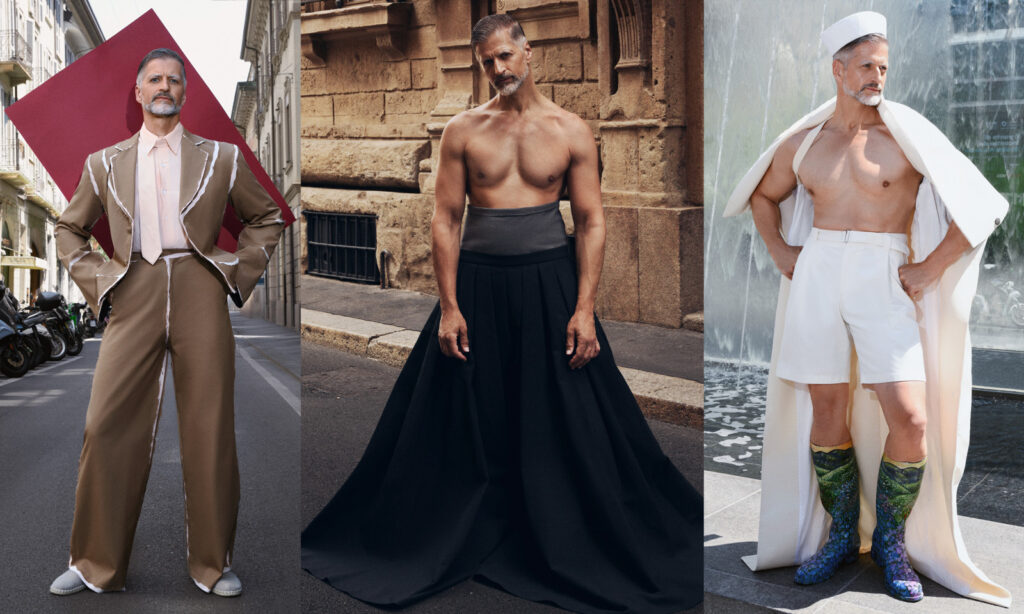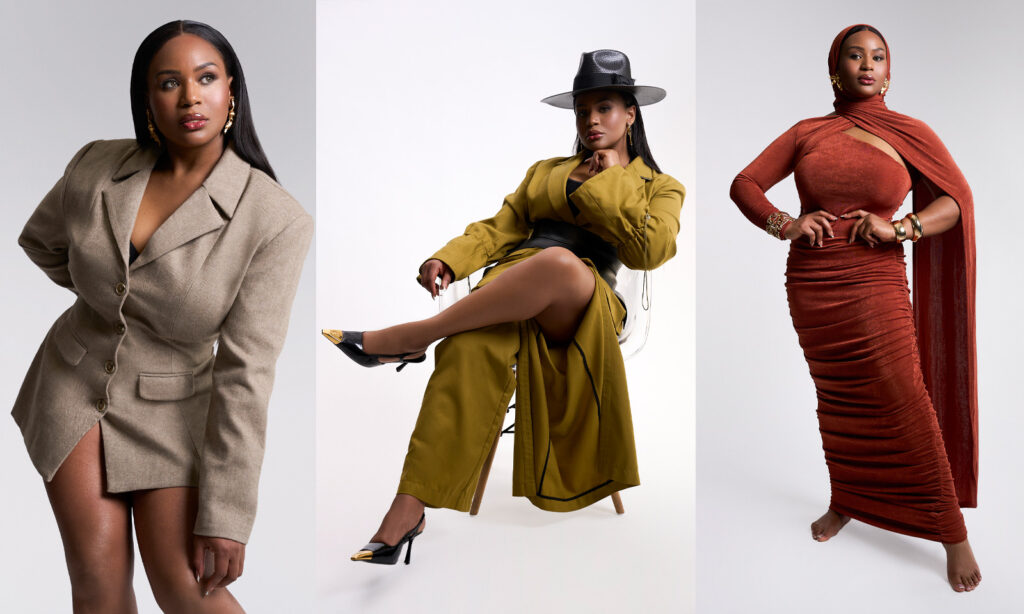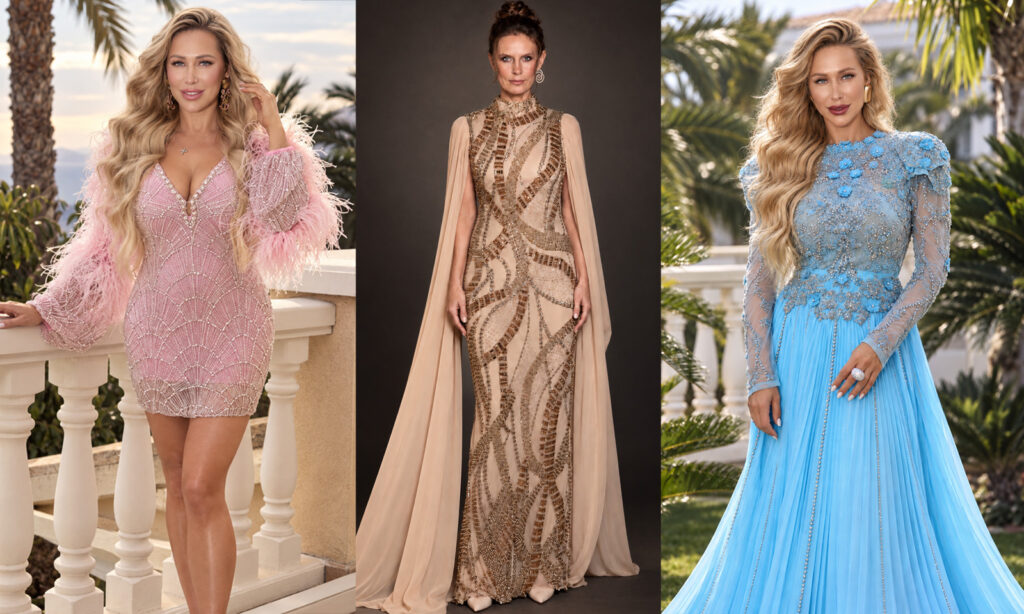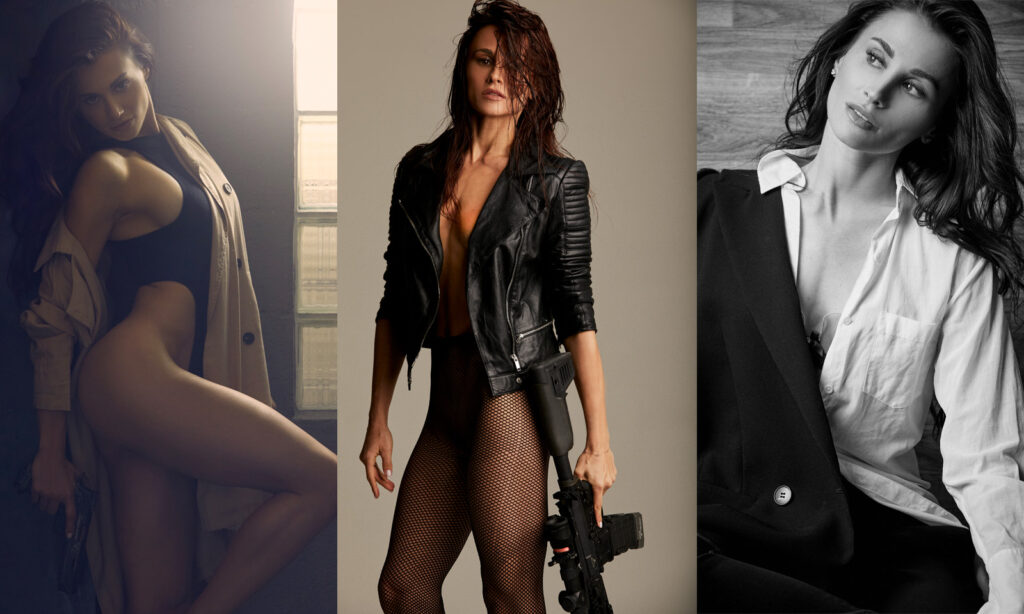
Amara dissolves boundaries between identity, craft, and consciousness
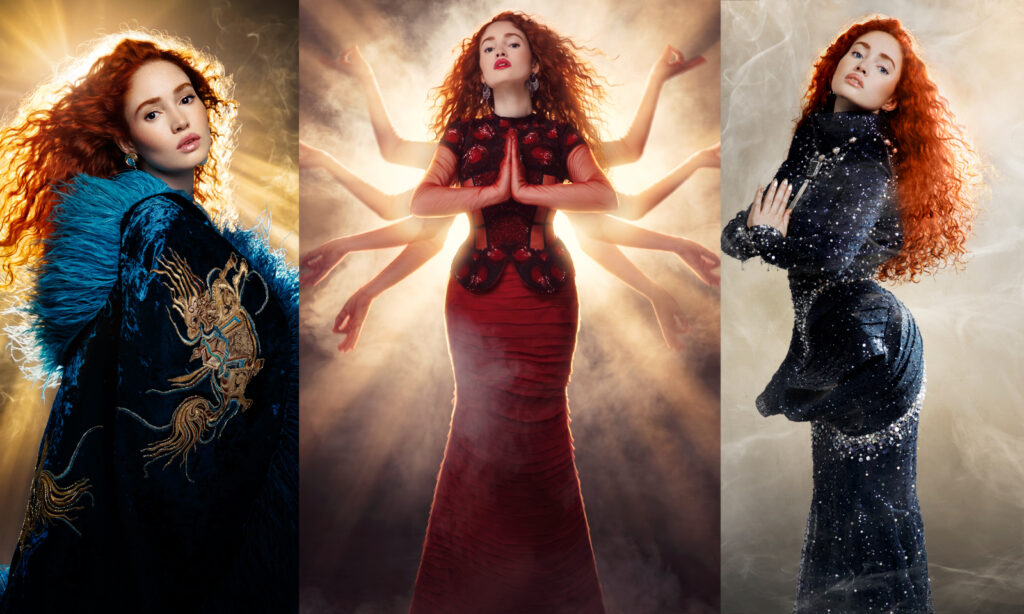
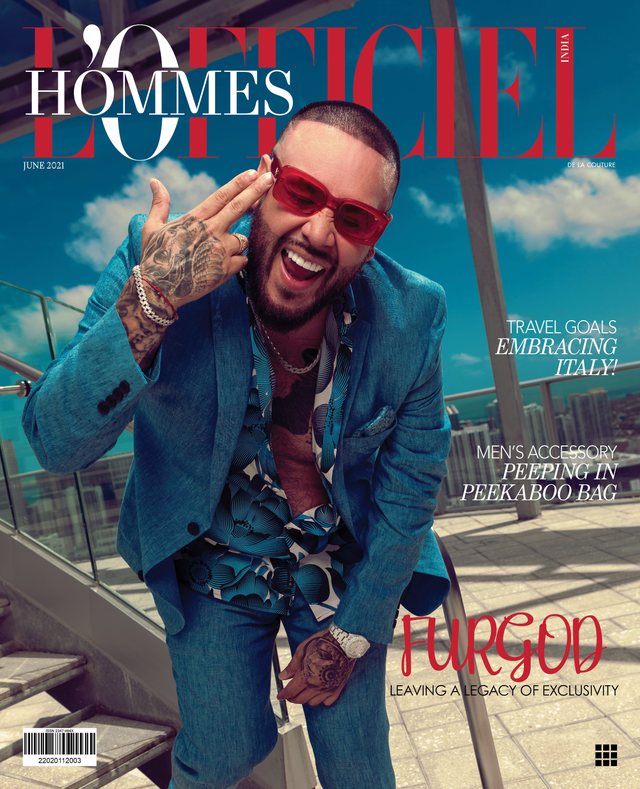

From high-speed commercial sets to narrative cinema, Amara discusses the realities of performance under pressure, the discipline of repetition, and the instinct required to stay present across constantly changing creative environments, where adaptability becomes as important as skill, and observation becomes the foundation of artistic survival and growth.
Team credits:
Talent: Amara Vayder
Photography: Reinhardt Kenneth
Lighting Director: Ralphy Valle
Digitech: Suimay Lee
Hair: Yuma
Makeup: Carlos Gonzalez
Fashion Stylist: Lisa Smith Craig
Assistant Stylist: Essence Carson
Retouch: Mikhael Gan
 L’Officiel India DigitalRead L’Officiel India in the digital libraryEvery issue and every cover story, on TCG Media.Read now
In this special feature for L’Officiel India’s 25th Anniversary Edition, Amara reflects on a journey defined by accumulation rather than sudden transformation. From early work in commercials to more layered storytelling in film, she describes a process shaped by observation, repetition, and gradual refinement. Amara speaks about the discipline required to move between fast-paced environments and emotionally nuanced roles, and how each experience adds texture to her understanding of craft. The conversation reveals a perspective rooted in awareness and continuity, where creativity is seen as an evolving practice shaped over time rather than a fixed identity.

Wardrobe credits:
Le Thanh Hoa cape
Rmine dress
Deliguoro earrings
Amara, welcome to L’Officiel India’s 25th Anniversary Edition. What does it mean to you to be featured in a publication that has spent 25 years shaping conversations around culture, style, and storytelling?
Being featured in L’Officiel India’s 25th Anniversary Edition feels deeply meaningful because the publication has spent decades shaping culture. I’ve always believed that style is far more than aesthetics. It’s a reflection of consciousness, identity, and the evolution of society itself.
What resonates with me most is L’Officiel India’s ability to honor both heritage and innovation simultaneously. My work exists in that same space: bridging the ancient with the futuristic, the spiritual with the intellectual. So, this feature feels less like a moment of recognition and more like a beautiful alignment in a larger cultural conversation.
L’Officiel has long celebrated reinvention and bold creative voices. When you look at your own journey from commercials to film and production, where do you feel you truly “found” your voice as an artist?
I think I’ve always had a voice. I’ve always known my voice; I never necessarily found it. I rediscovered it, after it was buried beneath expectation, limitation, and the quiet conditioning society places on people to become smaller, safer, and more digestible versions of themselves.
So much of life, especially within creative industries, subtly teaches you to dilute your instincts in order to belong. To edit your imagination before it even has the chance to breathe. And I think part of becoming an artist is unlearning that. It’s remembering what existed before the noise.
 Wardrobe credits:
Bibhu Mohapatra dress
Rmine cape
Rachel Mulherin earrings
Growing up with Nigerian and Ashkenazi Jewish heritage, how has that layered identity influenced the kinds of stories you are drawn to tell and the characters you choose to embody?
Growing up with both Nigerian and Ashkenazi Jewish heritage shaped the way I see humanity, because both cultures are incredibly strong, prosperous, and deeply rooted in transcendence. What always stood out to me is that both communities know how to take information whether it’s hardship, opportunity, knowledge, or tradition and transform it into ascension. There’s an understanding in both cultures that survival is never enough; you build, you adapt, you elevate, and you pass something greater onto the next generation.
At the same time, I’ve never really liked viewing people through the lens of race. I understand culture and ancestry are important parts of our stories, but I personally don’t like the idea of separating humanity into categories that create more division than unity. I see people more as a beautiful fractal of humanity. Different expressions of the same source, all interconnected in some way. To me, the human experience is far greater than labels.
I think growing up around multiple cultures made me realize early on that, beneath language, tradition, or appearance, people are ultimately searching for the same things. That perspective deeply influences the stories I’m drawn to tell and the characters I choose to embody.
For me, storytelling is ultimately about connection. It’s about dissolving the illusion of separation and allowing people to recognize pieces of themselves in one another, regardless of background. That, to me, is the real power of art.
You’ve appeared in over 100 commercials before transitioning into film. What did that fast-paced world teach you about presence, performance, and discipline?
Doing over 100 commercials taught me how to move fluidly between different energies and environments. Every set, every director, and every group of people carries its own underlying essence, and I learned very quickly how to adapt in a way that brings out the highest potential of a production as efficiently and harmoniously as possible.
I’ve also always loved discipline, and I tend to work very well under pressure. I see pressure almost like a wave. Something you can either be pulled under by or learn to ride with fluidity and over time, I’ve really mastered that rhythm.
That world taught me presence, precision, and how to stay authentic in fast-moving environments. But more than anything, it taught me human awareness. Understanding how timing, energy, and emotion all shape performance. It’s something I’m genuinely grateful to have experienced because it built the foundation for everything, I do in film now.
Wardrobe credits:
Mannatt Gupta dress
Veronica Tharmalingam earrings
As both an actress and producer, how do you decide when a story is worth telling and when silence might actually be more powerful?
I think a story is worth telling when it reveals something truthful about the human experience. When it has the ability to move people, awaken something in them, or create deeper understanding. As an actress and producer, I’m always asking myself whether a project is adding meaningful perspective or simply adding more noise.
At the same time, I think silence can be incredibly powerful. Some information, if presented without care or balance, can actually create more tension and reverse the original intention behind the story. Too much extremity in any direction can sometimes deepen division rather than heal it, and I’m very conscious of that.
I try to tell stories that illuminate perspectives that haven’t been overly shown before. Stories that encourage people to see both sides of the coin rather than becoming more polarized. My goal is never to create separation or hate toward one side or another, but to bring more understanding, nuance, and ultimately unity.
For me, storytelling should expand human consciousness, not narrow it. And sometimes the most profound wisdom exists not only in what we choose to say, but also in what we choose to hold with care and restraint.
In a world that constantly demands visibility, what part of your creative identity do you consciously choose to protect or keep private?
I think in a world that constantly demands visibility, I’ve learned that not everything beautiful needs to be shared publicly. Some of the happiest moments in my life and some of my greatest blessings have remained private, and I’ve noticed there’s a certain peace and protection in that.
Growing up multi-religious, I became aware of concepts like the evil eye and the idea that energy carries weight. But I also believe that when too much focus is placed on negative beliefs, you unintentionally give them more power. So while I stay spiritually aware, I ultimately choose to believe that I’m protected by the divine.
At the same time, I still value privacy as an added form of protection. Not from fear, but from a desire to keep certain things sacred, grounded, and untouched by outside noise. I share through my art, but some parts of life feel more powerful when they’re nurtured quietly.
Wardrobe credits:
Bibhu Mohapatra dress
Veronica Tharmalingam necklace
Hanying earrings
Your work often explores cultural connection and unity. Do you think cinema today is genuinely moving toward empathy, or still caught in surface-level representation?
I think cinema is in a transitional period right now. Over the past few years, especially in the United States, storytelling became very extreme on both sides politically, and at times it felt like films were prioritizing narratives over the art itself. I think that unintentionally created more division rather than unity.
But recently, I’ve started to see a shift back toward authenticity. Toward storytelling rooted in truth, emotion, and human connection rather than ideology. Audiences are craving sincerity again, and I think the industry is listening.
That gives me a lot of hope because cinema has the power to bring people together by helping us understand different perspectives without creating more separation. I truly believe the next decade of film will move toward a more harmonious and conscious form of storytelling, and I’m grateful to be part of that positive evolution.
When you step into a character, do you feel like you are discovering a new version of yourself, or letting go of one?
I think it’s a little bit of both. Discovering and letting go simultaneously. When I step into a character, I don’t approach it as “acting” in the traditional sense. It feels more like becoming a vessel for their emotional world, their energy, their spirit, even if only for a moment in time.
There’s a kind of surrender that happens where parts of myself become quieter so the character can move through me more fully. It almost feels transformative, like stepping into another frequency of human experience rather than performing one.
Every role leaves something with me afterward, though. Each character reveals a different perspective, emotion, or truth about humanity, so in that process, I think you inevitably discover new parts of yourself too.
Wardrobe credits:
Alpana Neeraj dress
Veronica Tharmalingam necklace
Hanying earrings
What has been the most emotionally honest moment of your career so far, where you felt completely aligned with your craft?
I think the most emotionally honest moments in my career have been the ones where I completely disappeared into the work. Where there was no awareness of the camera, no performance, no thinking, just pure presence. Those moments feel almost timeless, like something deeper is moving through you rather than you trying to control it. Ironically, those are usually the quietest moments on set, but they’re the ones that stay with me the longest.
Before we wrap up, Amara, what is one question you wish people would ask you more often, but rarely ever do?
Honestly, I don’t really move through life wishing people asked me certain questions. I think the most meaningful conversations happen naturally when there’s genuine curiosity and presence in the moment. Every interaction reveals something different, so I try not to place expectations on what should or shouldn’t be asked.
Spotted a mistake, or your photo used without permission? Report a correction