Dilip Kapur: The Monk Who Designs
For 40 years, Dilip Kapur has sifted through his life philosophies to craft his brainchild into an evolving, eco-conscious entity.
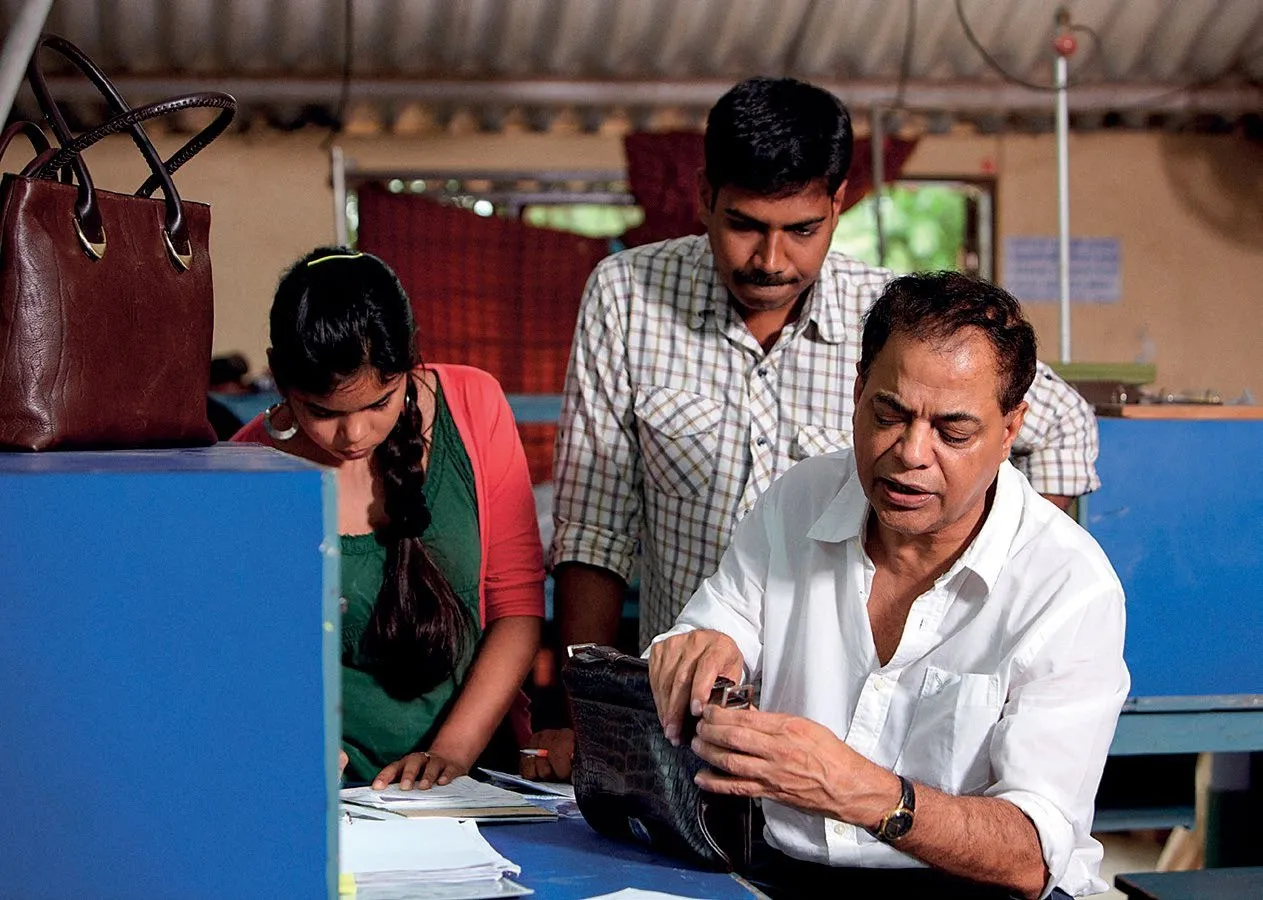




More often than not, a story begins at one’s home turf. But not for Dilip Kapur who is seemingly in love with disrupting set norms. When leather businesses were disengaging itself from vegetable tanning, he denounced chemical tanning to embrace forgotten techniques that use natural seeds and barks native to South India. When international brands started making a beeline of India in the ’80s, Dilip packed his bags, literally, to ship out Hidesign leather goods to Castro Street and Haight-Ashbury in San Francisco, and Portobello Road in London. “I wouldn’t call it a collection,” Dilip says, talking about his first line of leather accessories. Two handbags, two briefcases, two wallets and one travel bag left his one-man workshop. “The briefcases still sell,” he tells us from Puducherry. The rough looking, vegetable-tanned leathers were sort of rebellious.
Four decades later, the workshop — a coconut thatch roof on top of a rented floor on a house opposite a noisy temple — has turned into a company with 3,000 odd employees. Dilip is also a man of contrasts. His childhood was spent in a spiritual (and spirited) Aurobindo ashram in Puducherry, in sharp contrast to his next one and a half decades spent in hippie America. He was a part of the radical counterculture of the late ’60s and ’70s, and yet ached to be back. But, business was not what brought him back. An opportunity to co-build utopian world, Auroville, did. Even today, ashram is a part of his backup plan.
 L’Officiel India DigitalRead L’Officiel India in the digital libraryEvery issue and every cover story, on TCG Media.Read now
For now, it is 50 per cent operations, 30 per cent creative work and 20 per cent private life that keep him busy.
For a brand in the business of hide (Hidesign derives its name from hide + design that was simplified by an English stockiest), it seems less quixotic to be associated with a place that inspires equality and free-spirited living. But, for those hesitant to carry leather products, Dilip has a solution. It might be comforting for them to know that every Hidesign product uses skin from animals that died of natural cause or from unused hide from meat factories. “We are actually a byproduct of the meat industry. We never use hide where the animal is killed for its skin. Reuse of a hide is ecological, far better than it rotting,” Dilip adds. Most of the exotic varieties are sourced from farmed animals, such as ostrich and deer from New Zealand.
By using only vegetable extracts for tanning, Hidesign has demonstrated that sustainability can be beautiful too, a bit rough, but beautiful nevertheless. All waste water from the in-house tannery is filtered using RO before it is let out, and is reused in landscaping. “We do not burn anything,” he says.
The process that takes the responsible route might be tedious and time-consuming, but yields great results. There is no assembly line production as each product is handcrafted. Brass buckles are exclusively sand-casted and polished by hand for hours at their brass forge. The craftsmen, then, hand-knot each stitch ending, even as the cutters cut leather using fine-pointed knives, a skill that takes two years to master.
Every step is manual… sorting of leather to check for grain patterns, cutting natural grain leathers, leather finishing, panels securing done on German stitching machines. Hidesign also includes Marca Punto, a vanishing craft, where every stitch is embossed by a heated metal foot. “It is a heritage craft exclusive to Florence that I studied 30 years ago in Santa Croce, Italy. It has since been abandoned there for being ‘time consuming’, but we believe that the greatest beauty is often slow,” Dilip says. “At the heart of being a brand, it needs to offer a better life, or why exist?” he questions.
But, things were in stark contrast when he entered this field. There were rip-offs and mass produced ugly designs, giving Indian craftsmanship a bad name. Hidesign tried changing that. It started off by selling abroad as a largely rebel masculine brand. After making it to London stores in the 1980s, opening its first exclusive store in Moscow in 1997, and reaching Malaysia and South Africa, Hidesign was launched in India in 1999. “The final move transformed us from a manufacturer to a retailer,” Dilip says.
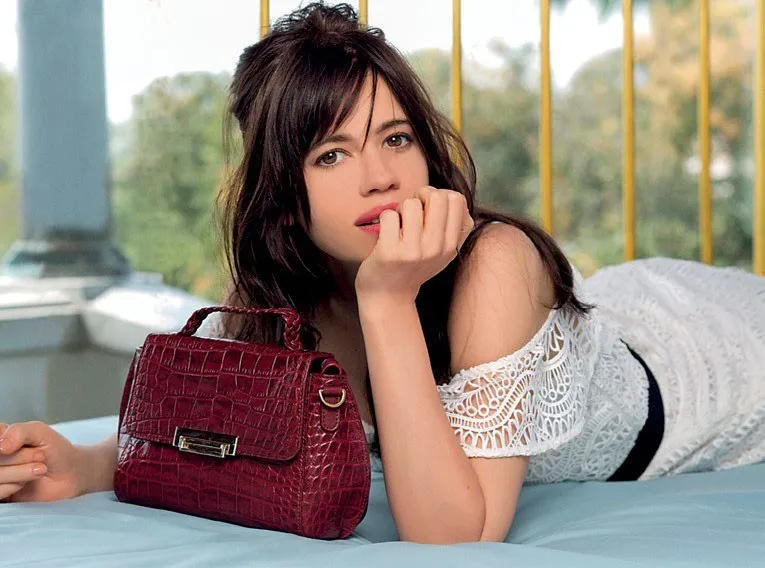
He feels it isn’t easier to make a breakthrough today than it was 40 years ago. “It might be easier to get bigger because the market is expanding but the competition is stiff,” Dilip adds. India might have been Hidesign’s gold spot, but for some reason, there aren’t many homegrown labels that have tasted success here. In fact, India is a hub of tanneries with global brands getting their raw material and tanning done here, but something pushes us back. “The lack of confidence in our modern culture is what makes it difficult to create an Indian brand that has international relevance,” Dilip puts it politely. The brand has been evolving with the market and Indian sensibilities. Eight years after Hidesign opened its flagship store in Puducherry, it has found its muse with a Puducherry connect… Kalki Koechlin.
The creative process has been an interesting one for Dilip, who asked Kalki to show him all her bags and clothes, and share her favourite words and colours. Leather swatches were exchanged, and her wardrobe and Pinterest accounts were rummaged through. Nine months and dozens of Skype calls later, new shapes and colour palettes were created... round, boxy clutches and flattened bowling bags in shades of antique gold, rust, lobster orange and nudes. “We didn’t want an endorsement, but someone who understood us, our craftsmanship and feels strongly about social issues. The strangest coincidence is that the current Hidesign office is in the house Kalki grew up in Puducherry,” Dilip says.
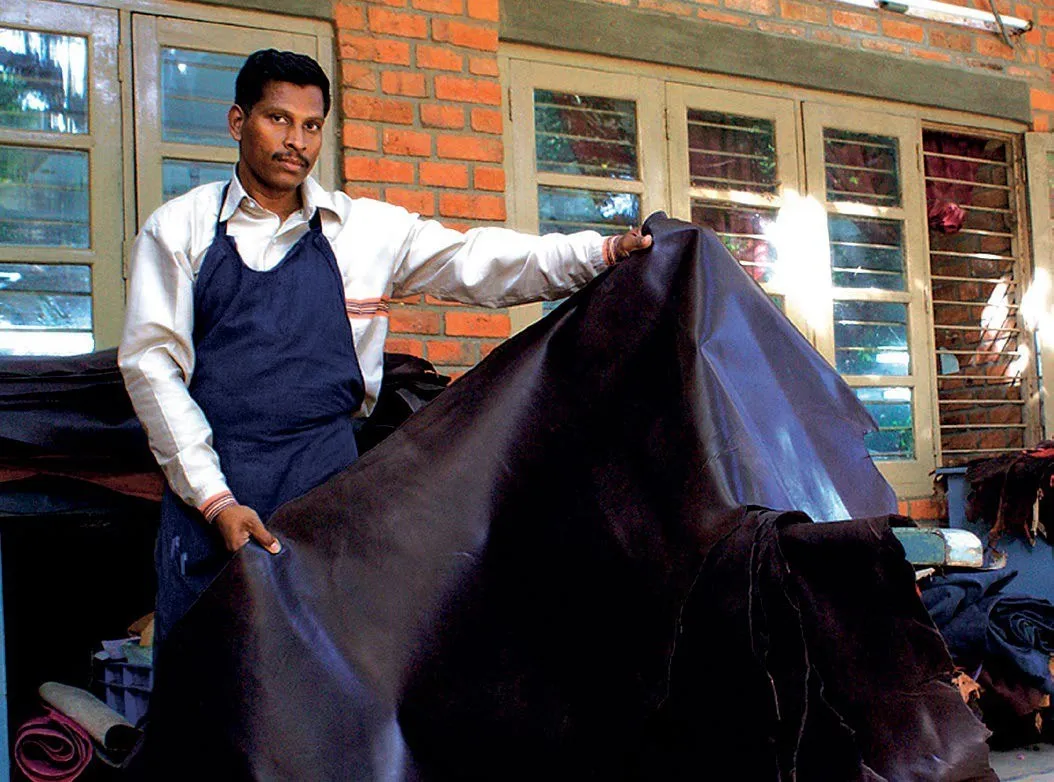
What is not a coincidence is how Dilip created an eco-conscious homegrown brand at a time when there was no reference point, and how he has maintained it. So much so that it attracted Yves Carcelle, the former President of Louis Vuitton to the brand. “He is a mentor, a friend, and the only investor we have ever accepted in our company,” Dilip says.
Perhaps the only atheist boy studying at an ashram school, Dilip has been a lover of the American dynamism, and yet went on to build a brand that celebrates Indian craftsmanship.
Ask him, what is the most difficult thing to achieve, and he will answer with a seriousness of a monk about to denounce his wealth. “How does one balance one’s life between business and an idealistic living,” he asks. Even as he gets busy with the launch a line of goods made with ostrich and deer hide, the design industry would be looking for an answer.
Rapid fire
- If I was not a designer, I would have been… either a current affairs professor or in a job that requires hand work (in Auroville preferably), maybe a landscape artist or an ecologist
- On an average day, I dress up in… Diesel jeans and white or black shirt with leather sneakers
- On my playlist… Grateful Dead, Simon & Garfunkel, Amy Winehouse
- The last book I read… Joan Didion’s Slouching Towards Bethlehem
- My ideal vacation would be… on an isolated beach or at a wildlife park
- One person, I would like to be reborn as… a happy Buddhist monk
From the April 2018 issue of L’Officiel India.
Spotted a mistake, or your photo used without permission? Report a correction