
Crowning Glitters Of Golconda
Diamonds, rubies and emeralds: The sparkling legacy of the Nizams of Hyderabad




Tum iftikhar-i-Dakhan
Ho tajdar-i-Dakhan
 L’Officiel India DigitalRead L’Officiel India in the digital libraryEvery issue and every cover story, on TCG Media.Read now
Tum ho Hind main mumtaz shahryar-i-Dakhan
You are the pride of Deccan; the King of Deccan,
Among the rulers of India, the only one that counts
Is the King of Deccan.
~ Mir Osman Ali Khan (VII Nizam)
It is a captivating spectacle on how we can measure the status of a nation through the artifacts used by them. History of Indian gems and jewels exemplify the profuse history of the nation. The rise and fall of its splendour were followed by the manoeuvre of its diamonds and other precious stones. So in a way, we might just say that these stones chose their owners and the tales associated with these glittering rocks are justified.
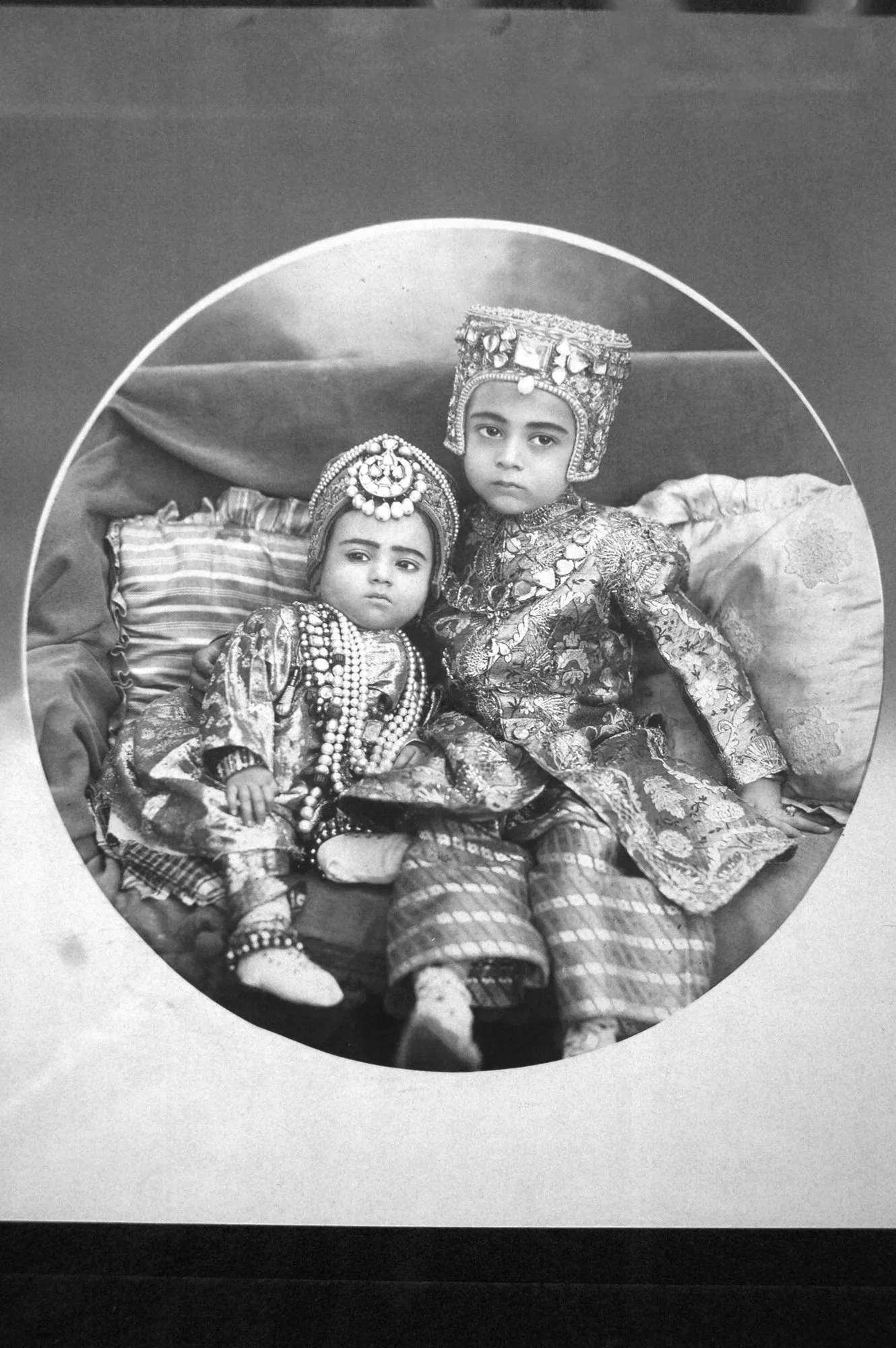
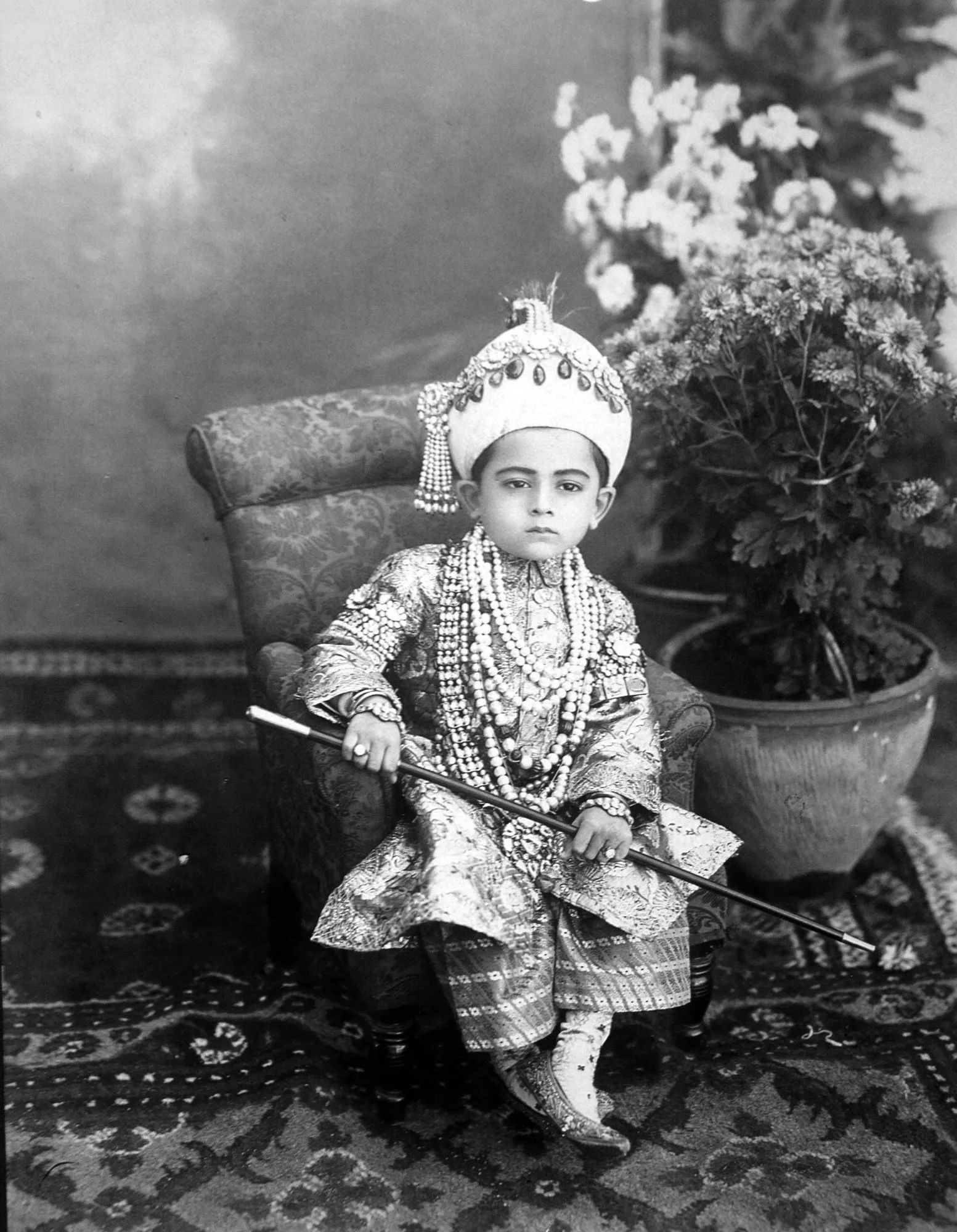
Throughout Indian history, jewels and precious gems were passed on from generation to generation, becoming the property of the succeeding ruler, as long as he had the wisdom and courage to retain them. In the public eye the incalculable wealth of the Asaf Jah dynasty (1724 - 1948) the longest rule by a single dynasty over the Deccan and their sparkling history is linked with luxury and grandiosity.
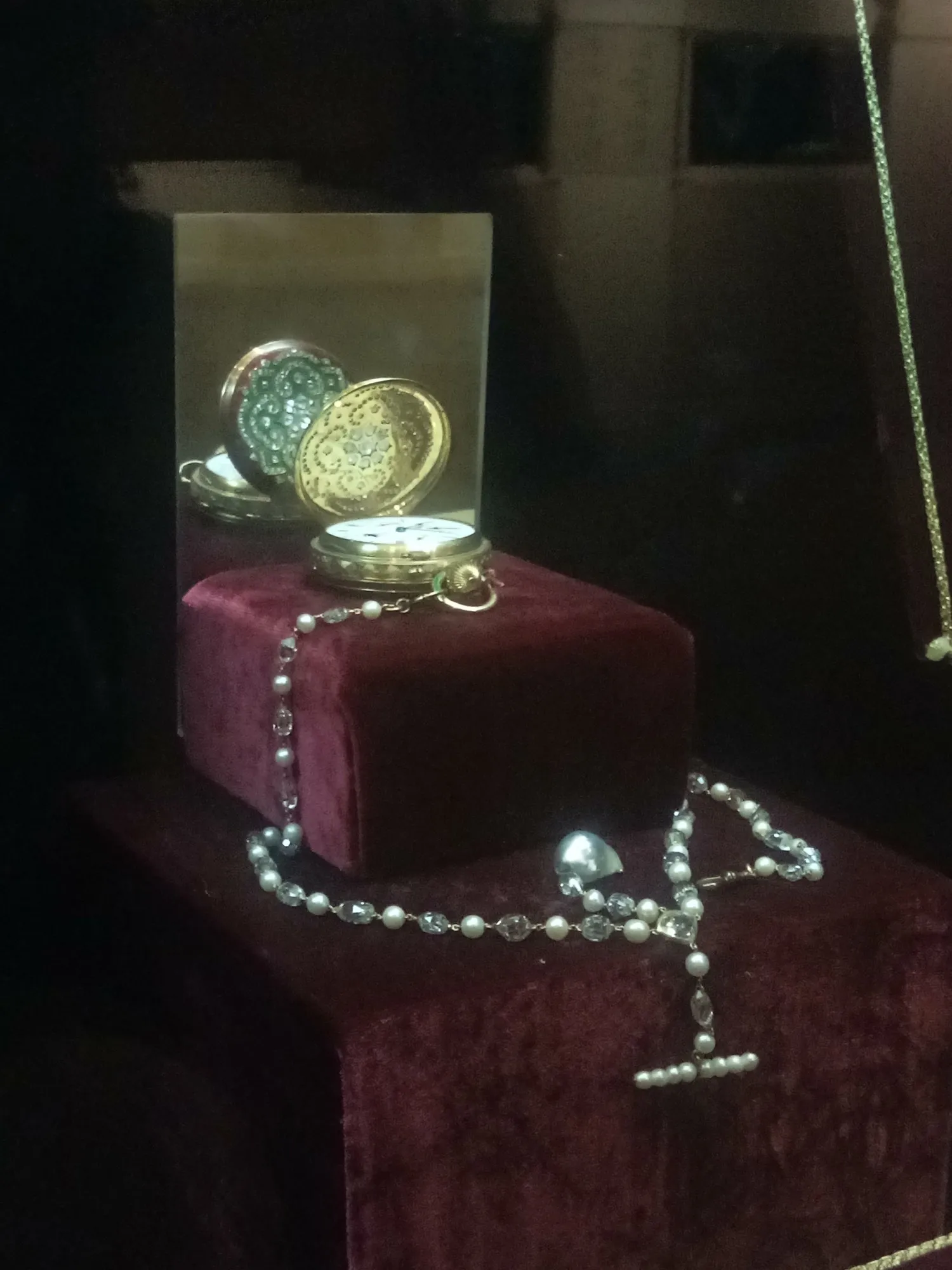
The wealth that was once a part of the wealthiest empire, now lays tucked in the darkness of a bank vault. The riches comprise of 173 pieces of rare value and antiquity which are only a small fraction of the Nizams legendary heritage. Among them are a finely enameled pocket watches; Burmese rubies studded sarphechs’; seven-strand pearl necklace strung with 150 large and 230 small pearls, with a two-diamond pendant attached to it; a pair of bracelets studded with 270 diamonds, 22 fine partially uncut and unmounted emeralds weighing 414.25 carats; and a diamond-set belt made in France by Oscar Massi Pieres. There are also rings, brooches, buttons, studded swords, diamond-studded images of camels, gold ingots and much more.
Though jewels were an important part of the history of the Nizams, another important aspect that attracted us, was the tale of how kulchas (Indian bread) foresaw the future of the royal rule. Folklore has it, that Mir Qamar-ud-Din the first Nizam of Hyderabad, was invited by a Sufi Saint for a meal, who offered him kulchas tied in a yellow cloth. The hungry Mir Qamar-ud-Din ate seven kulchas and after his meal, the saint blessed him and prophesied that one day he would have the wealthiest empire and that his descendants would rule for seven generations.
Blessing or a curse, this prophecy had Mir Osman Ali Khan the seventh Nizam of Hyderabad, daunting during his coronation. The prophecy soon came true as the seventh Nizam joined the Indian union. The eighth descendant, Mukarram Jah managed to lose everything he had inherited.
The Nizam’s jewels are a hybrid of Mughal, Deccani and European influences, reflecting the ethos of a dynasty that originated in the Mughal court, ruled the Deccan and was a staunch ally of the British Empire. The origin of names of these jewels are of Urdu and Persian descent. As history buffs we unravel the story behind the unspoken jewels of the Asaf Jahi Dynasty.
Jacob Diamond
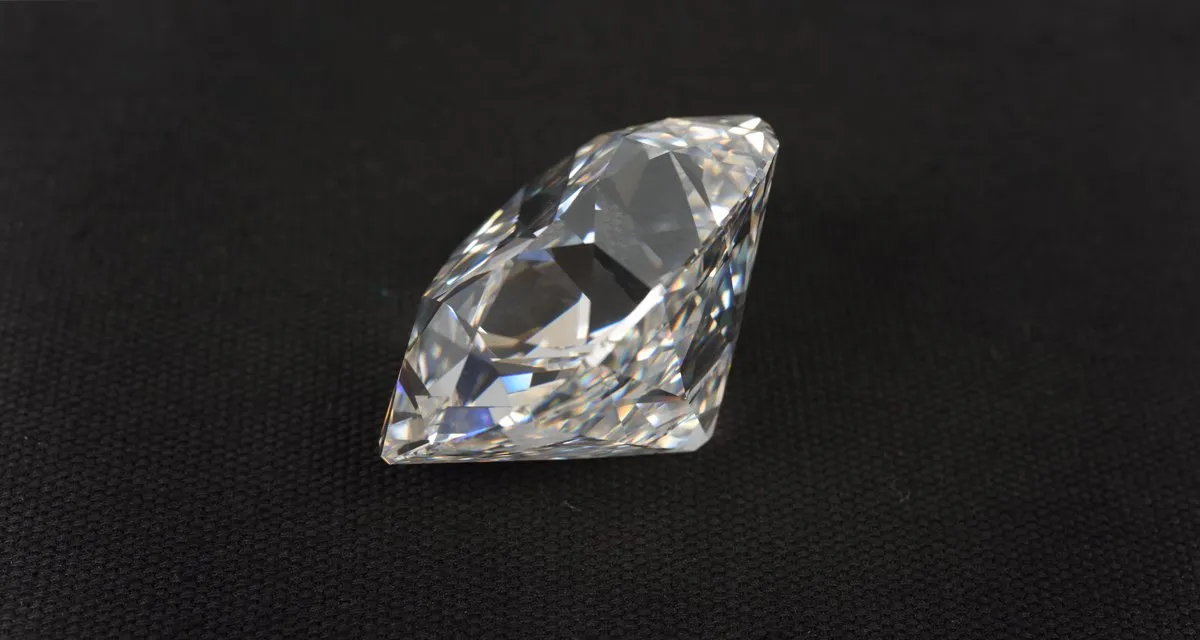
A sparkling 184.50 carats, earlier known as the Great White has a wondrous story associated with it. In 1890, Alexander Malcolm Jacob, a small jeweler from Simla, offered it to the Nizam VI, Mahboob Ali Pasha. After collecting an advance sum for the diamond, Jacob had promised that the money would remain untouched till the time the Nizam approves of the gem. To Jacob’s surprise the Nizam did not like the diamond and demanded a return of the deposited amount. Jacob was unable to repay the deposit which resulted in a series of lawsuits against him by the Nizam.
With such drama unfolding, the Nizam lost interest in the diamond, wrapped it in an old rag and tossed it in one of his drawers. It is the fifth largest diamond in the world, which was found by the last Nizam, Osman Ali Khan, in the toe of his father’s shoe at Chowmahalla Palace and he himself used it as a paperweight for a long time.
Turra-i-Zammarud-Wa-Kanwal Almas-Wa-Yakhoot
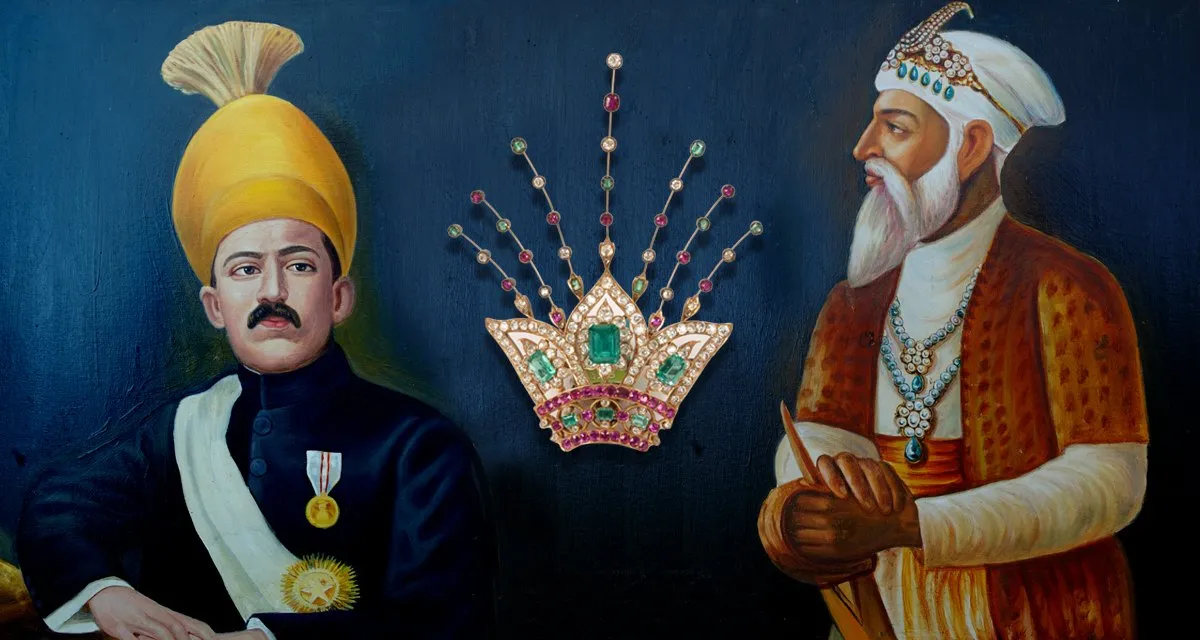
A turban jewel set with emerald, diamonds, and rubies. A symbol of royal insignia, a turra was adorned by the Nizam of Hyderabad while he was appearing in the British court. While the crown design is very English, the use of faceted gems and settings is reminiscent of the jewelry made in 19th century Calcutta.
Kanthi Dolna Almas-Wa-Moti
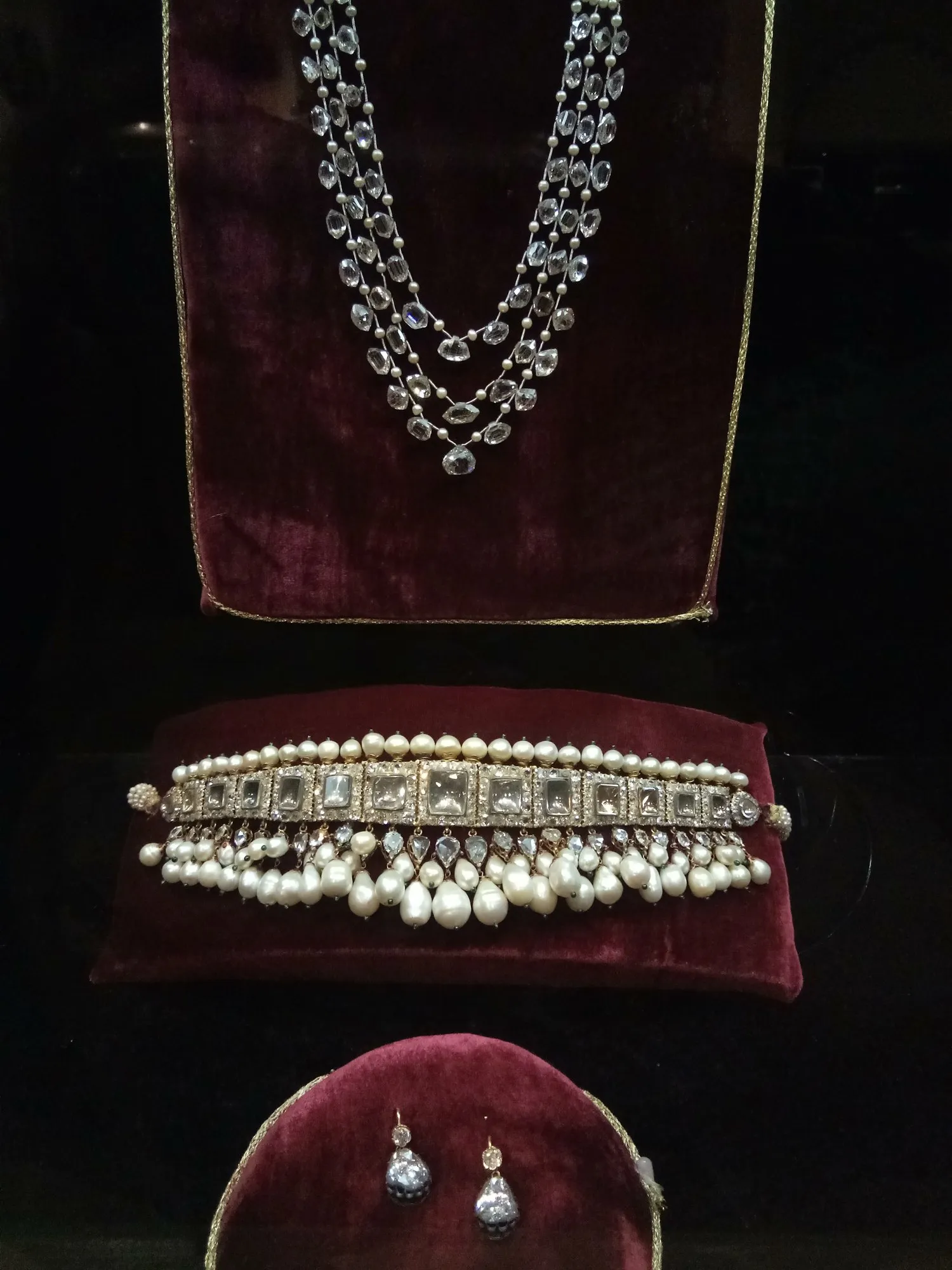
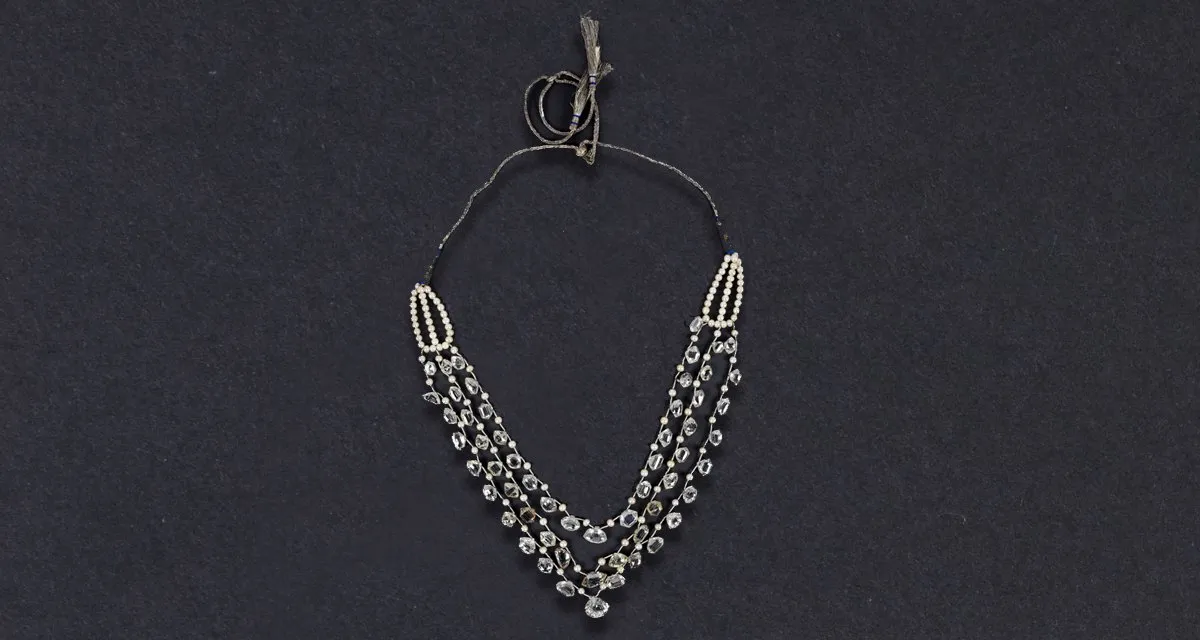
A necklace set with diamond beads and pearls. This exquisite necklace comprises three rows of pearls and diamonds strung together with a taveez-shaped diamond in the center. The necklace is an exemplification to the skill of the jeweller who managed to hand drill the diamonds side-to-side with enough precision to preserve the shape of the gems.
Kanthi Almas Kanval
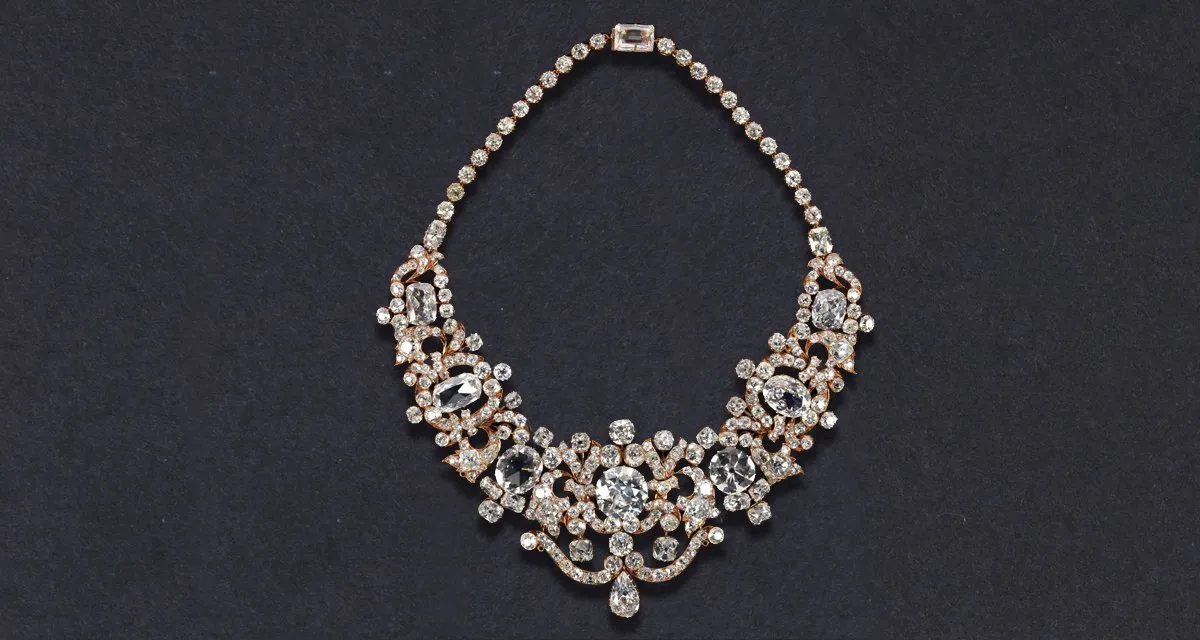
An enrapturing gold necklace set with diamonds was inspired by the Victorian era. It is set with diamonds in an intricate pattern with large circular and oval diamonds in the middle surrounded by smaller diamonds and a pear-shaped diamond hanging from the middle. It ends with a rather western-style clasp befitting a rectangular diamond. The 226 victorian cut diamonds weigh more than 150 carats.
Chintak Parab
A necklace set in the form of a row of square diamonds, ending with drops of pear-shaped pearls. This jewel combines methods of traditional Indian craftsmanship with a western method of setting gems in lightweight mounts.
Ghariyal Jaravi Meenakari
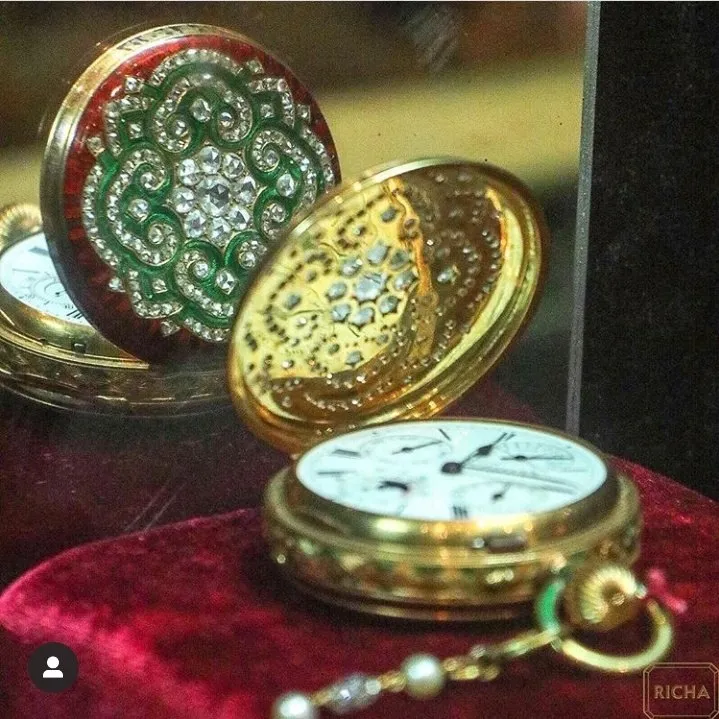
A 19th century gold and enameled chronograph watch, for which time stands still. Embellished with rich hues of red and green enamel on a gold surface, encrusted with diamonds
The collection of diamonds, emeralds, rubies and pearls in these jewels speak of the workmanship of Indian lapidarists and the grandeur of the Golconda gems.
Spotted a mistake, or your photo used without permission? Report a correction












