Arthur Arbesser: Viennese Waltz
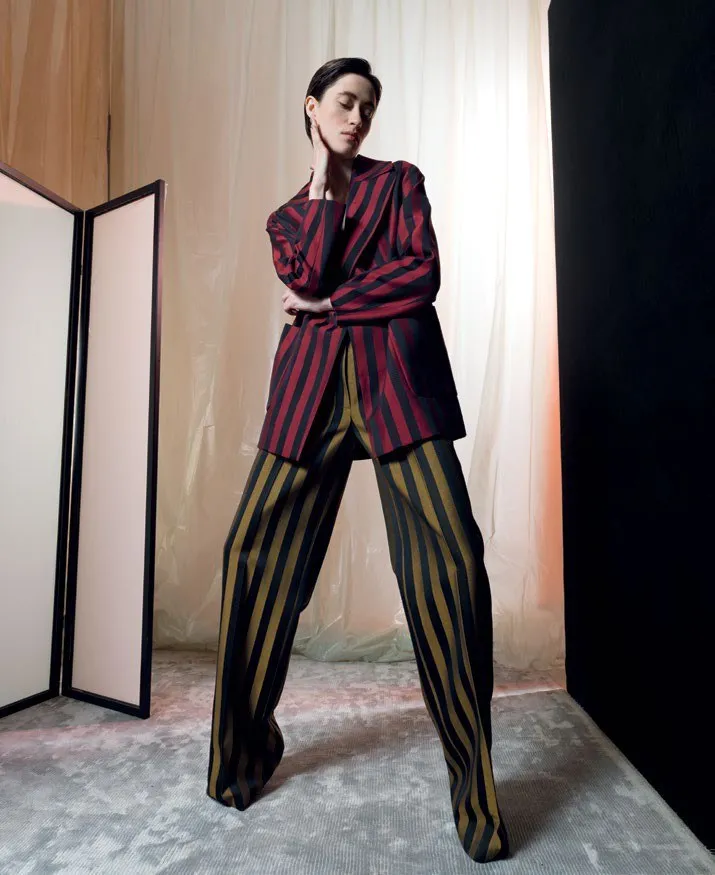
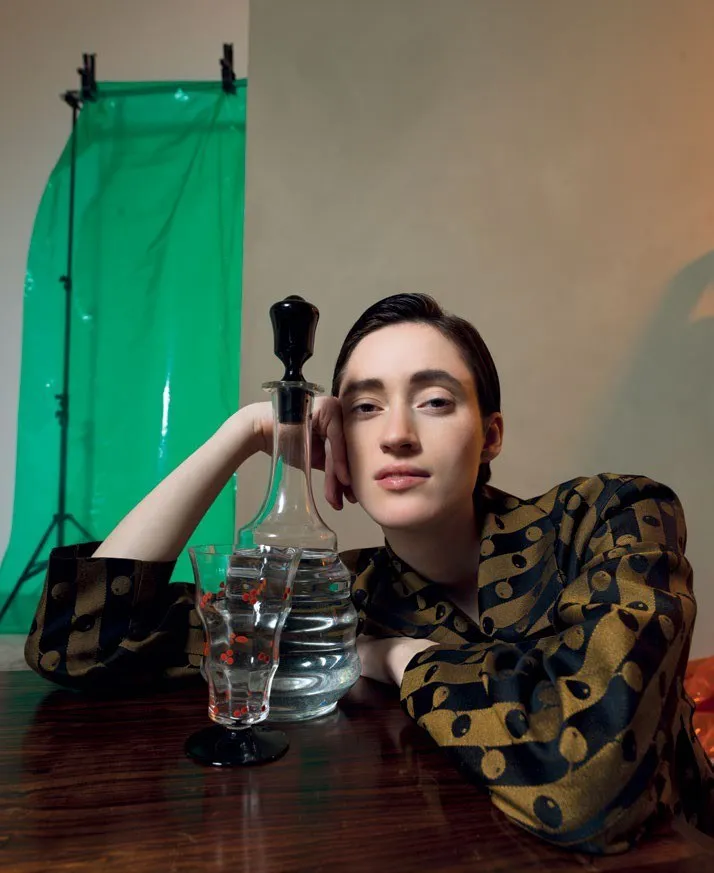
Designer Arthur Arbesser pays homage to one of the Austrian greats and art nouveau designer Koloman Moser with a collection inspired by and representing his motifs.




In 1918, as burns and wounds from World War I were still felt across Europe, Vienna wept not only for the inhumanity that this war of wars brought, but also the loss of a quarter of its most esteemed representatives: painter and inventor Gustav Klimt, expressionist Egon Schiele, architect and urbanist Otto Wagner and graphic designer Koloman Moser.
Precursor of European avant-garde movements, Viennese Secession was born the day Klimt and Moser quit the Association of Austrian Artists to establish a new association of artists, representative of a different movement in art. Of which Klimt became founder and president, with the role of advocating art in its entirety, from painting to architecture, sculpture and music. At the time, Vienna was the centre of European intellectual thought and lifestyle.
 L’Officiel India DigitalRead L’Officiel India in the digital libraryEvery issue and every cover story, on TCG Media.Read now
“In London, Paris and Berlin (…), active intellectuals from different cultural fields (…) rarely interacted with one another. They lived in professional spaces which were relatively compartmentalised. On the contrary, in Vienna, the cohesion of all the elite was maintained, to a certain degree, up until 1900,” explains renowned historian Carl Emil Schorske in his book Fin-de-siècle Vienna: Politics and Culture published in 1979.
Simultaneously, Moser, along with architect Josef Hoffmann and the Wiener Werkstätte (Viennese ateliers), created an association of artists and artisans with the objective of reassembling all applied arts in service of “total” art.
New age for Austrian fashion
Even if today Vienna is not the leading city when it comes to fashion, Viennese ateliers attract some of the biggest capitals of fashion, as was proved by designer Paul Poiret, who, during a trip to Vienna in 1910, visited a few ateliers. What he saw there, called out to his imagination. The works of artists such as Maria Likarz, Felice Rix-Ueno, Dagobert Peche and Eduard Josef Wimmer-Wisgrill incidentally inspired his collection, Mode Wien 1914/1915. It was also after that visit that the prince of Parisian couture set up the Maison Martine, a school for Applied Arts in 1911.
At the same time in Austria, Viennese fashion was being emulated, specifically by the support of Austrian composer Alma Mahler. She was first married to composer Gustav Mahler, followed by a couple of others, she often played the muse to many artists, and enjoyed the reputation of a seductress with many lovers, that is through which she was recognised among her peers. She was one of the first women who fought to have corsets removed from a woman’s wardrobe, a painful thing which did nothing significant but obstruct the movement of a woman’s body, an aspect so dear to modernists.
But it was equally the movement put in motion by painter Gustav Klimt and Emilie Louise Flöge that took Austrian fashion to the foreground, notably because it broadened the definition of women’s clothing. An accomplished entrepreneur, Alma the stylist and fashion designer, along with her sister, ran a salon for which she hired more than 80 hands. Another woman who helped raise the bar when it came to Austrian fashion abroad was Dora Kallmus or Madame d’Ora as she was nicknamed. Her photographs have been published in the biggest magazines in the business, including L’Officiel in 1928.
Modernity according to Arbesser
The Tourism Office of Vienna asked designer Arthur Arbesser to create a capsule collection honouring the modernist movement of Vienna. “There was nothing vintage in the way Madame d’Ora took photographs, but there was always a great sense of aesthetics.
And so, I wanted to give her the respect she deserves by calling on Elfie Semotan, another Austrian photographer.”
With a programme of varied and rich festivities, the city cannot help but prove its timelessness. “Vienna is a city that has always inspired me tremendously while also being one for which I have a soft spot that the moment the tourism office got in touch with me I was interested,” says Arbesser, “but what pushed me to accept was when they told me that the collection was to be done in collaboration with Backhausen, at Le MAK, the Museum of Applied Arts in Vienna. It was under the house that carried his name that he presented his collection in February during Milan Fashion Week.
In addition to his collaboration with Backhausen textiles, the designer was able to weave, for the first time, motifs on wool and silk, designs by the genius Koloman Moser. “I always loved Egon Schiele’s work, I found myself developing a new admiration for the works of Koloman Moser. I was fortunate enough to have been inspired by the motifs and textiles that he had created and transpose them into a style that was my own. Moser was a complete artist in the context of a modernist and also by the fact that he could do it all: painting, blowing glass, sketch motifs, weave, work wood, ceramics and so on. He was a true genius,” he says.
Photography: Elfie Semotan. Styling: Hannes Hetta.
From the March 2018 issue of L’Officiel India.
Spotted a mistake, or your photo used without permission? Report a correction