Breakfast with Raghavendra Rathore





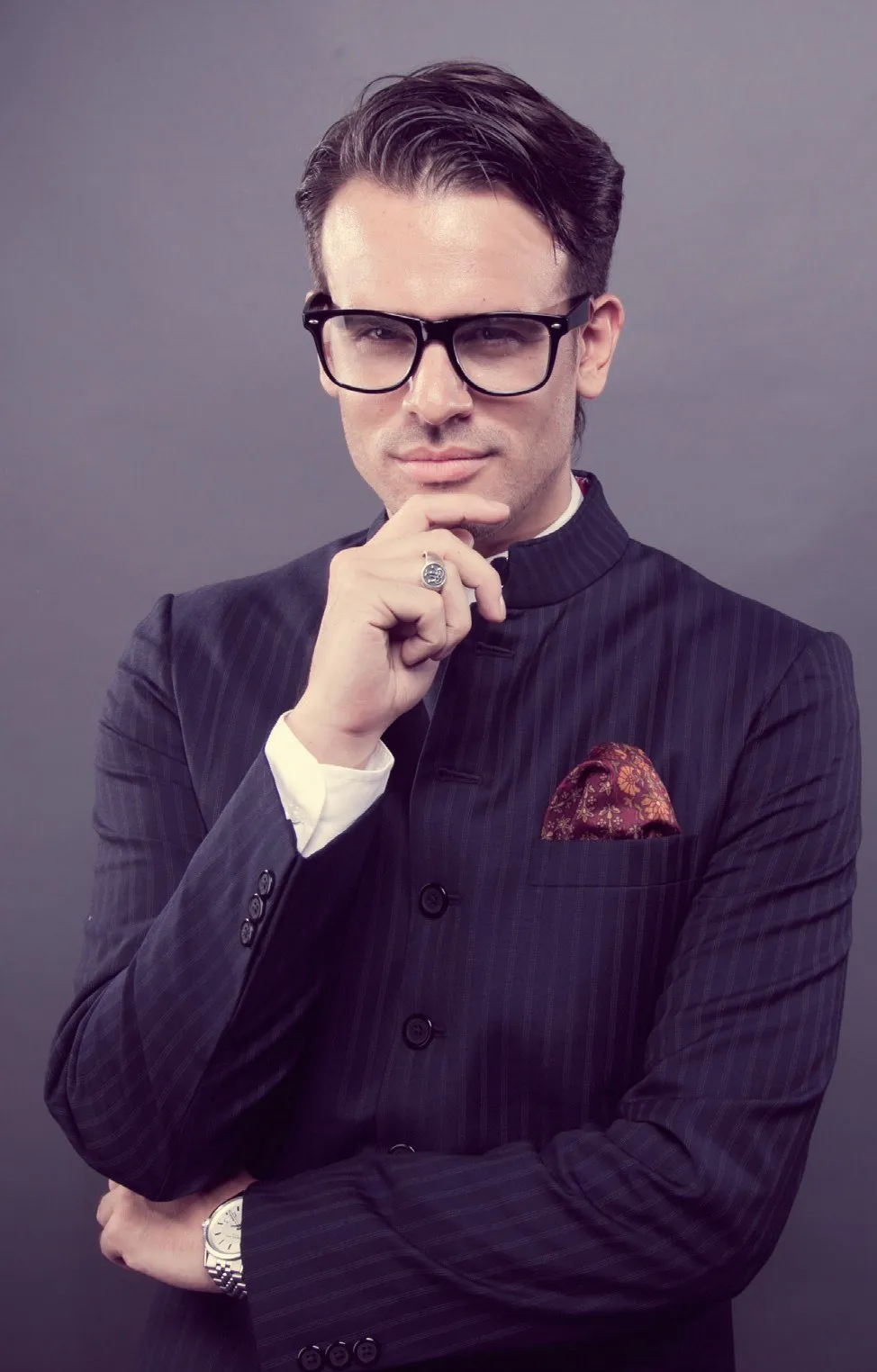
The blue-blooded Raghavendra Rathore is hoping to offer custom-made luxury to connoisseurs. In a free-wheeling chat, the designer reveals his early days of struggle in the US which he tackled with formidable fortitude, and a 20-year roller-coaster journey that maps the unfailing growth of crisp tailoring in a nation obsessed with embroidery.
A fashion education at Parsons, a campus placement at DKNY, and another as Oscar de la Renta’s third assistant, marked the beginning of a memorable life Raghavendra Rathore continues to live. And he is still raring to achieve more. The talented royal tells us all about his work, challanges, dreams and beyond.
 L’Officiel India DigitalRead L’Officiel India in the digital libraryEvery issue and every cover story, on TCG Media.Read now
You studied anthropology and robotics in the US, followed by your serendipitous turn towards fashion...
I was born in Jodhpur, and I am the second cousin of Maharaja Gaj Singh of Jodhpur. Being the eldest in the family, I had many responsibilities. I was an ace student, and topped in the CBSE board exams as I had art, my favourite subject in the curriculum. That pushed my percentage to 98 per cent and I was offered a seat at the prestigious St Stephen’s College, Delhi. But I wondered where History (Hons) take me. So I applied to a liberal arts college in Amherst, Massachusetts and was selected. My parents agreed to pay for one semester and then I would have to support myself. The tuition fee was really high. I studied robotics and electronics, so, yes, I can solder a circuit board. But liberal arts was what really interested me.
You worked three jobs to pay your fees. Tell us about those days of struggle.
I studied art and the great masters like Lorenzo Ghiglieri and Johan Vermeer, which developed my love for the paintbrush. But Hampshire was getting too expensive, so I had to move to Marlboro College, Vermont, and this is where I developed my self-confidence. I did dishes and discovered that there is a machine-the dishwasher-which can actually clean forks and knives. The maniacal pace of my life, got my mom so worried that she had to come down to see me and check if I was fine. She went back proud that I could manage to pay my tuition fees despite the mighty challenges that the US posed. Three jobs, one of which included painting old houses during the vacations, helped me sail through. At that time, we got paid $9 an hour! You learn a lot when you are on your own. As I had no place to stay, I begged two girls to let me share their apartment in Chelsea. They were fashion students at FIT, and they reluctantly agreedtheir parents even flew down from India to check on their ‘new roommate’!
How did you balance your interests?
As an individual I have a deep interest in almost all spheres of life. In my early years it was my endeavour to explore the fundamentals of our existence through the school of anthropology. Electronics and robotics was of interest as it helps one see into the future. Product design, which we practise today, completely depends on the inner structure of products-whether they are electronic circuit buttons on a mobile phone. Understanding how to manipulate the inner content can give a superior edge to design in the products’ shape, textures and interface, which is balanced between being modern and classic.
What was the most valuable lesson you learnt at Parsons? How did it help you in your career as a designer?

Seeing how well I was doing, my professors suggested that I move to Parsons, New York. There, I was mesmerised by the landscape and sheer potential the institute offered an individual like me. Tuition, again, was an uphill task, so I worked with six different companies to support myself. But I was a hungry soul, and education was the most satiating experience of my journey in the US. It equipped me in more ways than one for the challenges life would fling in my direction. I must confess I was not a designer; I was an artist. So being in the midst of ‘fashion designers’ took some getting used to! I also remember doing my first sketch-when they asked us to make a swimsuit. I came up with a lycra-chiffon one. Unusual, but courageous!
You worked with Oscar de la Renta and DKNY, two divergent genres. What did you gain from them, professionally, and personally?
I was handpicked by Donna (Karan) when I was at Parsons; just three of us got selected at campus placements. My classmates were wondering how this quiet, shy backbencher got this plush offer! Donna Karan had captured the pulse of the American prêt market through her DKNY label. Using basic fabrics to create collections that were designed for the masters has its own challenges, whereas at Oscar de la Renta everything we did was for the high-end market. Learning the two separate aspects of designing was extremely important for me as a designer. One atelier had a hectic and a panic-stricken atmosphere as collections were churned out almost every week. Things were quite opposite at the high-end label as it was about the exquisite use of fabric and design.
There is an interesting story about how you met Oscar De La Renta.
DKNY and Mr Renta’s offices were in the same building, and we met in the elevator. I introduced myself and he asked me to show him my portfolio. When I subsequently called, he was in Paris. But I didn’t give up and I called a month later from a phone booth across the road, I got to talk to him and he asked me to see him. When he saw my sketches, his jaw dropped and he asked me to join the next day! And I did-as his third assistant. The most interesting part was that at Renta, we had no mannequins but real models who we would drape. But my US sojourn was cut short as my dad had an accident and I had to return to India in 1994. Also, that year my label was born by providence.
You did your first line for an event for Maharaja Gaj Singh of Jodhpur...
Yes. I had gone to see my dad and Gaj Ji asked me to design a line for a grand event. I had no sewing unit, no plan, nothing. But we did everything with great alacrity with a budget of ₹3 lakhs and that got the ball rolling. I thought, why go back and work for somebody else. So I stayed and RR was born. My first ever womenswear collection was entirely bought by Tina Tahiliani of Ensemble.
Why did you choose menswear?
Catering to an audience that is addicted to embroidery is tough for a lover of classic tailoring like me. For me, cut determines character. Plus, I am not influenced by global catwalks as we offer custom-made luxury.
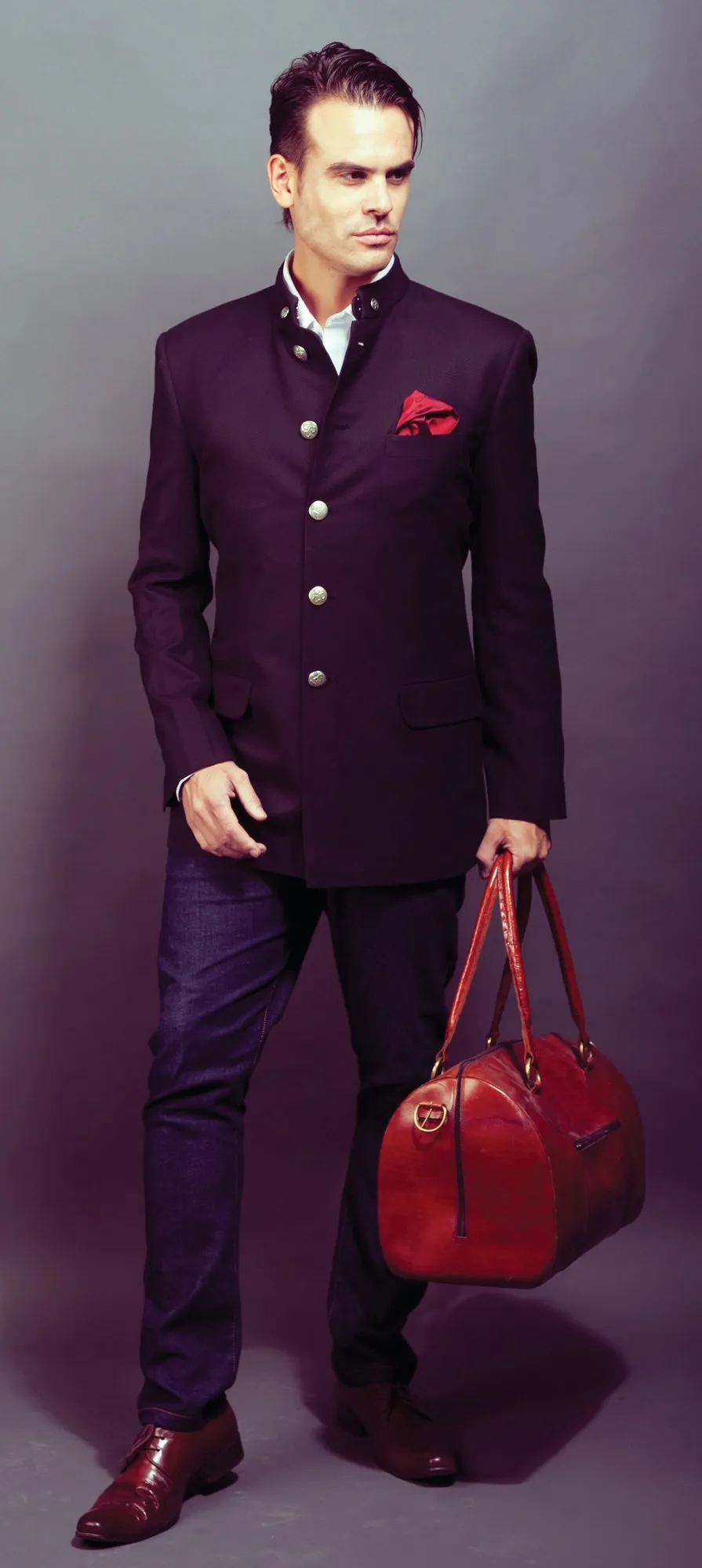
We did a show for the King of Monaco and were sold out by the end of it. So those who understand this dynamic will pay for it. We have five stores now.
Obviously, I must be doing something right! The only problem with menswear is that it is seasonal; men don’t buy jackets in summer. But I do see the menswear market evolving. People are moving away from jackets resembling cushion covers, with all the sequins and embroidery, and opting for a more mature look. Obsession with the ornate is finally fading; high-street brands like Zara have been a catalyst. Acceptance of design is far more than it has ever been. And people are also looking at custom clothing and a personalised touch.
You have been called ‘king of the bandgala’. Do you like the epithet?
My aim a few decades ago was to bring value to our heritage through fashion; the bandgala jacket is a true legacy of our rich past and my brand has been persistently pushing the fashion envelope, to present the bandgala in its true light.
How else would you like to describe your brand?
Modern, versatile, and now global.
In 2003, you also forayed into prêt. Do you think the market was ready for it?
The market has been ready for it for some time, but real estate creates a resistance that interferes in the growth in that segment. If renting a space was cheaper, designer prêt would be the buzzword by now. But because of the escalation in real estate prices, most designer brands limit the exposure to the high-end segment, as the prices in this segment can sustain the real estate component easily.
You also designed clothes for Mr Bachchan in Eklavya, for Fawad Khan in Khoobsurat, Akshay in OMG, and Salman Khan for his sister’s wedding. Would you be interested in doing costumes for Bollywood in the future?

Designing for special assignments such as Bollywood, or doing uniform design for hotels is a bit different as it is more personalised. We pride ourselves on customisation and, therefore, working with these legends from Bollywood has been a company priority. We dressed Sohail, Salman and Arbaaz for their sister Arpita’s wedding and there is no one like Mr Bachchan to carry off a bandhgala with such aplomb! Arjun Kapoor is the most humble and rooted guy I have met from the film industry and he totally trusts your judgement as a designer, so it was a pleasure to design for him.
You also forayed into denim with Club J...
Club J has since then moved on to various Internet portals. I believe the future of prêt is on the Internet.
How would you describe your journey of 20 years?
I have been lucky to be able to steer the direction of design for my company as per the social requirements. I believe the lack of obsession with fashion has set me free to be more of a brand developer, rather than a fashion designer. I strongly believe brands are created over decades of hard work and one has to keep instilling emotion and passion in the brand for it to outlast the creator.
What were the high and low points?
In the business of fashion, one is only as good as one’s last collection, which gives us the ability to improve every season. The humble beginnings of the brand are truly the high points in my life.
Lessons to your son?
There are a lot of lessons that I teach my 10-year-old son Amar Singh Rathore. For instance, we were studying Flipkart and its success. I often tell him that he must make it at 35 so that he can enjoy his life henceforth. Children can do wonders with the right guidance.
Raghavendra’s 5 most stylish men
1. Actor Saif Ali Khan
2. Polo player Sanjay Kapoor
3. Jyotiraditya Scindia
4. Actor Arjun Kapoor
5. Yuvraj Shivraj Singh of Jodhpur
5 timeless must-haves for every man’s wardrobe
1. A bandgala for all seasons
2. A selection of great white shirts
3. Stylish denim jeans
4. Great shoes
5. Customised accessories such as pocket scarfs, belts and the like, because a complete man is the one who understands the value of his character, and no character is complete without a customised wardrobe made specifically for the individual.
From the January 2015 issue of L’Officiel India.
Spotted a mistake, or your photo used without permission? Report a correction